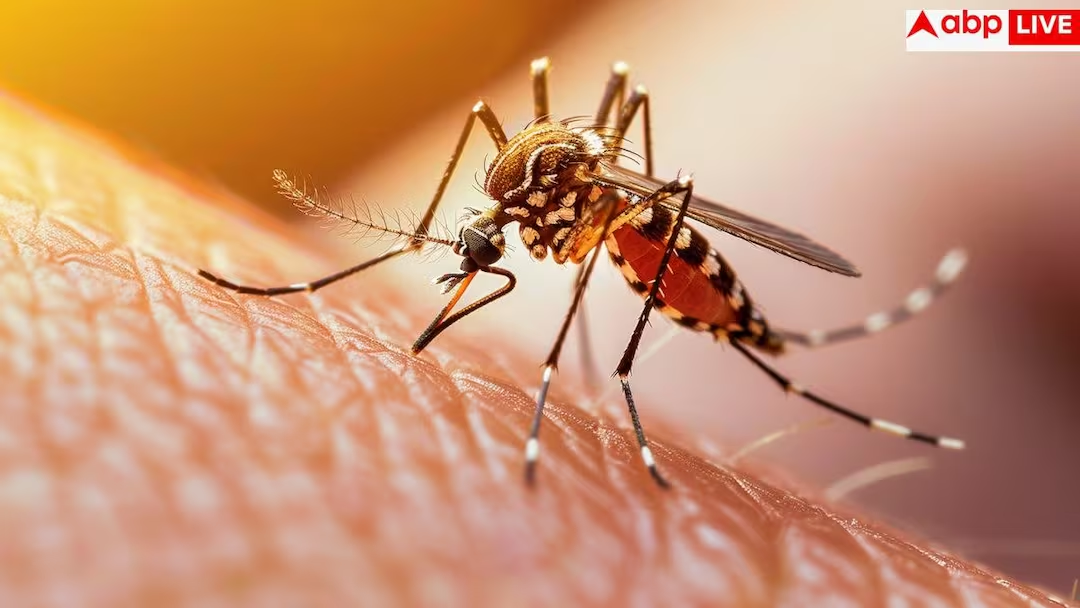
Why Mosquitoes Stop Biting Humans After Blood Meal: As soon as the summer season arrives, the terror of mosquitoes starts. Now scientists have made an important discovery related to mosquitoes, which can help in controlling their biting habit in future. Research has revealed that a special type of cells are present in the body of female mosquitoes, which after drinking blood, stop the desire to bite humans for some time. This discovery is also surprising because this control is not related to the brain but to the cells present in the last part of the mosquito’s stomach.
What new discoveries have been made?
Columbia University scientist Laura Duval’s team found that these cells are located where the balance of food and nutrition is created in the mosquito’s body. Actually, female mosquitoes do not show interest in biting humans for a few days after drinking blood. Scientists were trying to understand this switch for a long time. It has now been discovered that this process is linked to a receptor called NPYLR7, which controls appetite and activity after meals.
The study found that when this receptor was removed, mosquitoes continued to drink blood, but the development of their eggs was affected. Their eggs hatched less successfully and appeared to be deficient in nutrition. From this it became clear that this system controls not only the desire for food but also the reproductive process.
Also read- Vitamin Side Effects: Be careful! Taking this vitamin without medical advice may prove costly and may cause loss of eyesight.
Some special signals in the mosquito’s body
During the research, it also came to light that after drinking blood, some special signals get activated in the mosquito’s body. A peptide signal emanating from nerve endings activates these cells, causing them to send a message to the body that it has now received nutrition. Interestingly, this process may not be limited to just mosquitoes. Scientists believe that in many organisms there is a similar connection between the intestine and the brain, which controls eating and appetite.
This discovery is important because it may be easier to target this system present in the stomach of mosquitoes compared to their brain. Initial tests have also revealed chemicals that can reduce the desire of mosquitoes to bite by activating this receptor. This study has been published in Current Biology, which indicates that new and effective ways to control mosquitoes may emerge in the future.
Read this also – Side Effects Of Birth Control Pills: Do pregnancy prevention medicines cause cancer, know how true is this?
Disclaimer: This information is based on research studies and expert opinion. Do not consider this as a substitute for medical advice. Before adopting any new activity or exercise, please consult your doctor or relevant specialist.