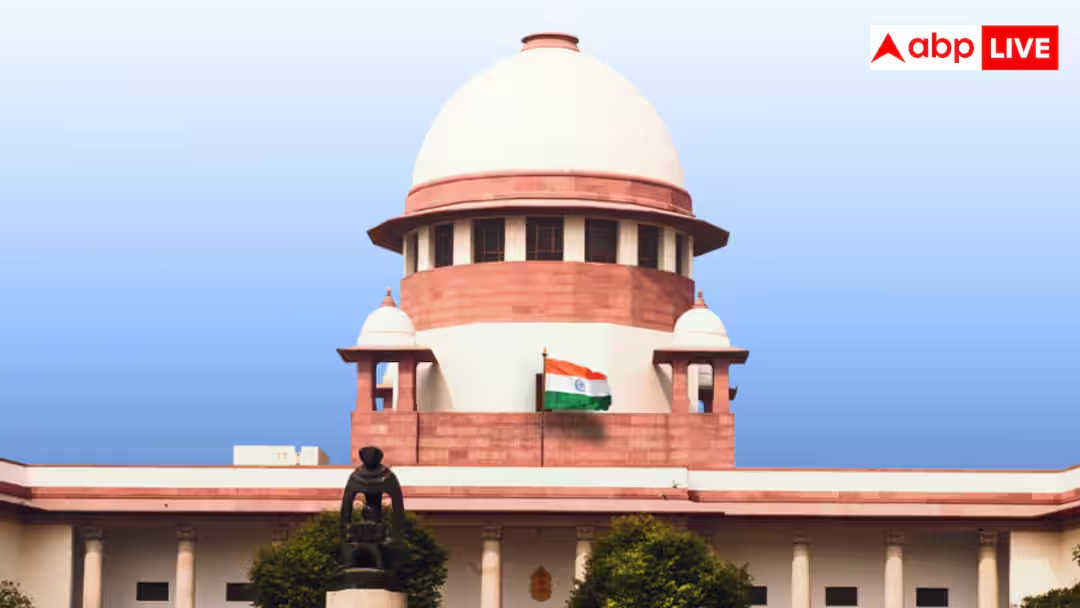
Supreme Court Order: The Supreme Court has taken strict action against posting videos and audio clips related to court proceedings on social media without permission. The bench of Chief Justice Surya Kant, Justice Joymalya Bagchi and Justice V. Mohan issued an interim order and made it clear that now it will not be easy to extract clips from the live streaming of the court and spread it on social media. In such a situation, it is important to know what is prohibited under the new order and what action can be taken if the rules are broken.
What does the new order of the Supreme Court say?
The court has said in its interim order that without the prior permission of the Secretary General of the Supreme Court or the Registrar General of the concerned High Court, it will be prohibited to extract, modify, disseminate, post, repost, upload or monetize the audio video recording of the judicial proceedings. This order was given during the hearing on a petition, in which concern was expressed over the misuse of edited clips cut from the live streaming of the court. However, the court has made it clear that this instruction will not apply to news reporting.
Also read: Inverter Backup: Inverter backup has decreased, check these things before going to the mechanic.
News reporting will be exempted
During the hearing, Senior Advocate Vikas Singh said that he has no objection to the live streaming of the court, but has objection to the misuse of edited clips on social media. This is the reason why the court has kept general news reporting by media organizations out of this ban. This order is currently interim and a notice has been issued to other parties including the Central Government and their response has been sought.
This action can be taken if rules are broken
In India, the Contempt of Courts Act, 1971 applies to cases related to contempt of court. Under Section 12 of this Act, contempt of court can be punished with simple imprisonment up to six months, or a fine up to two thousand rupees, or both together. If the accused apologizes to the court and the court is satisfied with it, then the punishment can also be waived. Even if there is a violation of the existing order of the Supreme Court, action can be taken under this law, because it will be considered as direct disobedience of the court’s instructions.
Why is this information important for common people
People active on social media will now have to be cautious before sharing any clip related to the court. Posting such recordings without permission can now directly invite legal action, so it is important for social media users to be fully aware of this new rule.
Also read: Cyber Scam: Cyber scammers are adopting these new methods of cheating, keep these things in mind