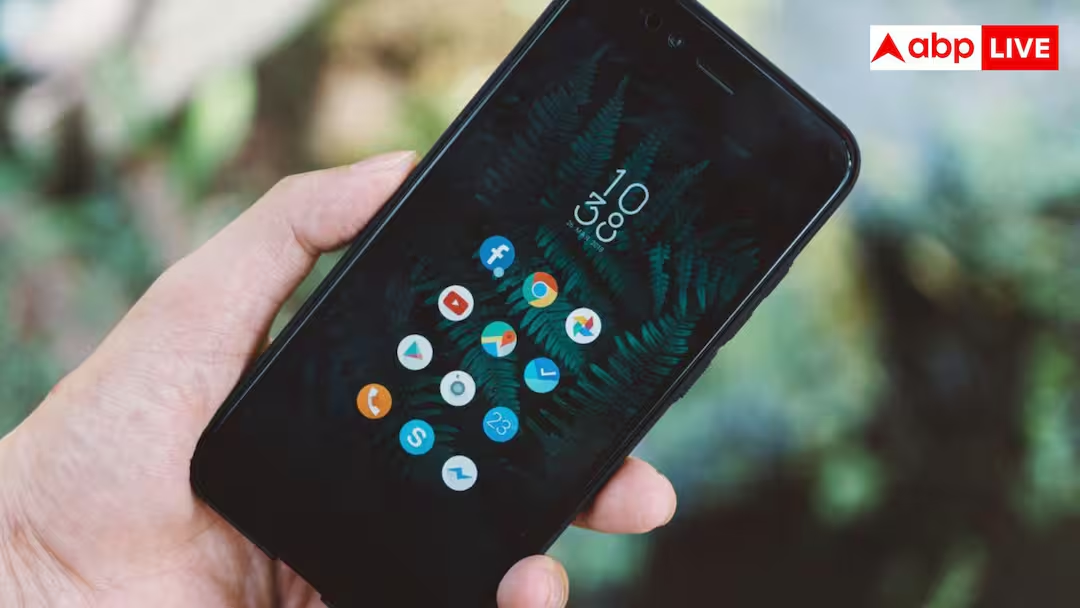
Smartphone Refresh Rate: Nowadays, while buying a smartphone, most of the people pay attention to the camera, battery, processor and RAM, but there is also a technology related to the display which changes the entire experience of using the phone. This technology is refresh rate. In fact, in the last few years, smartphone companies have launched phones with 90Hz, 120Hz and even 144Hz refresh in the market.
This is the reason that now this feature is not limited to any premium phone, but is easily seen in mid-range smartphones also. In such a situation, let us now tell you what is the refresh rate of the phone and what is the use of this technology. Why is it important to have complete information about a smartphone before buying it?
What is the refresh rate of the phone?
Refresh rate means how many times the screen of a smartphone updates or refreshes itself in a second. It is measured in Hertz i.e. Hz. For example, if a phone’s screen comes with a 60Hz refresh rate, it means that it updates the screen 60 times in a second. In this way, the 90Hz screen refreshes itself 90 times in 1 second and the 120Hz screen refreshes itself 120 times. In fact, the smartphone screen keeps changing multiple frames continuously, due to which every movement is visible. The more often the screen is refreshed, the more smooth and fluid the visual experience will be.
Higher refresh rate is considered good
Scrolling between apps, browsing social media and animations appear smoother on screens with high refresh rates. This is the reason why after using a 120Hz display, many users start feeling the 60Hz screen slow. By increasing the refresh rate, every activity seen on the screen looks more natural and fluid. That’s why smartphone companies present it as a very important feature.
Also read-What is the life of solar battery and what factors affect it? know everything
What is the difference between 60Hz, 90Hz and 120Hz?
The 60Hz refresh rate has been the smartphone industry standard for a long time and is still seen in many budget smartphones today. This is considered sufficient for normal calling, messaging and web browsing. At the same time, at 90Hz refresh rate, the screen is smoother than before. The experience of social media scrolling, app transitions and watching videos becomes better. Whereas the 120Hz display gives the most fluid experience. The difference can be clearly felt while gaming, fast scrolling and high frame rate, while watching content. This is the reason why today 120Hz display has become a standard feature in many flagship and mid-range smartphones.
Also read: Do you use induction stove? These 5 mistakes can cost you dearly, the stove can get damaged within minutes.