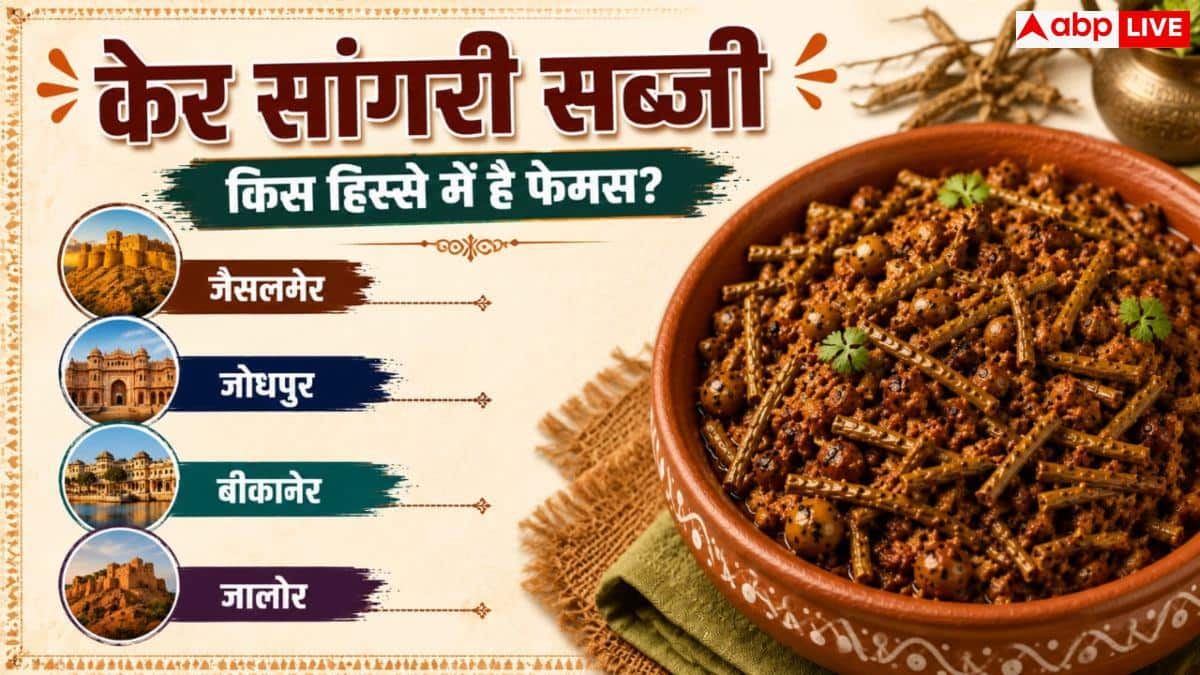
Ker Sangri Recipe Rajasthani Style: On hearing the name of Rajasthani food, the first thing that comes to mind are Dal-Bati-Churma, Gatte ki Sabzi or Lal Maas. But the traditional food of Rajasthan is not limited to these dishes only. Many such dishes are prepared here, both their taste and the way of making them are special. One of these is Ker Sangri vegetable. This vegetable with sweet, sour and spicy taste is especially considered to be the identity of the desert areas of Rajasthan.
The specialty of Ker Sangri is that it does not require a lot of ingredients to make it. It can be prepared with dry ker and sangri along with some common spices present in the house. In Rajasthan it is liked a lot with roti, bajra roti, puri or paratha. If you also want to enjoy Rajasthani taste at home, then you can easily prepare Ker Sangri vegetable.
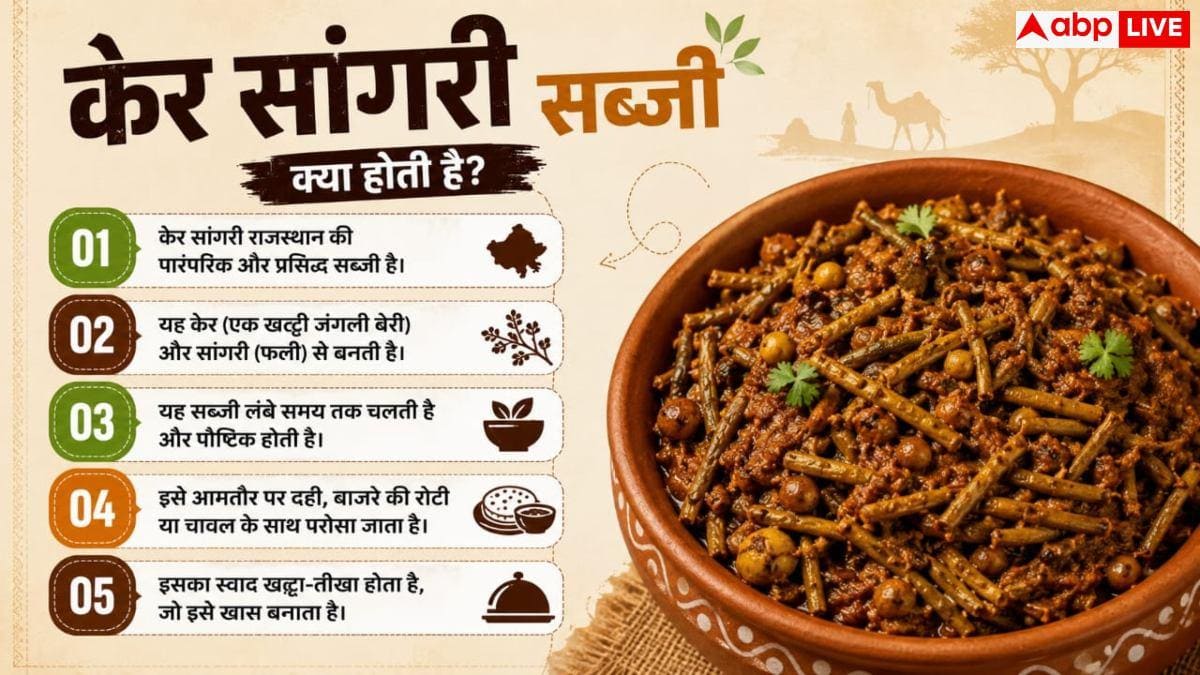
What are ker and sangri?
Ker and Sangri are traditional things found in the desert areas of Rajasthan. Ker is like a small plum, while Sangri is a long pod that grows on the Khejri tree. In dry areas like the Thar Desert of Rajasthan, where the availability of green vegetables was earlier limited, ker and sangri became an important part of the diet. After harvesting both of these can be dried and kept for a long time. This is the reason why even after the season is over, vegetables are made from dry ker and sangri. Today, apart from Rajasthan, dry ker and sangri are easily available in grocery stores or online in other cities also.
Ingredients for Ker Sangri Sabji
To make this vegetable, you can take about 1 cup of dry sangri and half a cup of ker. Apart from this, curd, oil, cumin, mustard, fennel, celery, asafoetida, turmeric, red chilli powder, coriander powder and dry mango powder will be required. Raisins and dried mango pieces can also be added to enhance the sweet and sour taste. Keep salt as per taste. The method of making Ker Sangri may be slightly different in different homes. Some people add curd to it while some prepare it without curd. Similarly, onion and garlic are also used as per choice. In traditional Marwari and Jain style, it is also made without onion and garlic.
It is important to soak Ker Sangri before making it.
One should not make vegetable by putting dry ker and sangri directly in the pan. First of all, clean both thoroughly and wash them with water two to three times. After this, they can be kept soaked in water for several hours or overnight. In some recipes, the method of soaking in curd is also adopted to reduce bitterness. After getting thoroughly soaked, boil the ker and sangri until they become soft. After boiling, drain the water and wash it once again with clean water. This helps in reducing their pungent or bitter taste. Now remove excess water and keep them aside.
Prepare Ker Sangri Masala like this
Now heat the pan and add oil as per requirement. When the oil is hot, add mustard seeds and cumin seeds. After this, add fennel, celery and a little asafoetida and fry lightly. When the aroma of spices starts coming, reduce the flame. Now add turmeric, red chilli powder, coriander powder and other dry spices as per requirement. If you like the taste of ginger-garlic, then its paste can also be added at this time. Cook the spices on low flame so that they do not burn.
Boiled Ker Sangri Mix in spices
After the masala is ready, add boiled ker and sangri to it and mix well. Now add salt as per taste and fry for a few minutes on low to medium flame. With this, the spices will coat the ker and sangri well. Add mango powder to it to bring sour taste. Raisins can be added for light sweetness. If dried mango pieces are available then they can also be added. This gives a good balance of sour and sweet taste to the vegetable. If you are using curd, then beat it well and put it on low flame and keep stirring continuously, so that the curd does not curdle.
Also read: Want to taste like McDonald’s and Burger King burgers? Don’t forget to add this thing while making it at home
Let the vegetables cook on low flame
After mixing everything well, cook the vegetable on low flame for a few minutes. Ker sangri vegetable is usually kept dry or with very little gravy, hence there is no need to add much water in it. When the spices mix well and the oil starts appearing slightly separate, turn off the gas. The prepared ker sangri can be served with hot millet roti. Apart from this, it also tastes good with wheat roti, paratha or puri. It can also be eaten as a side dish with lentils and rice. Due to the combination of sour, sweet and spicy tastes, Ker Sangri can give a special Rajasthani taste to even ordinary food.
Also read: Weekly Fasting Benefits: What are the benefits of fasting once a week? But these things have to be kept in mind