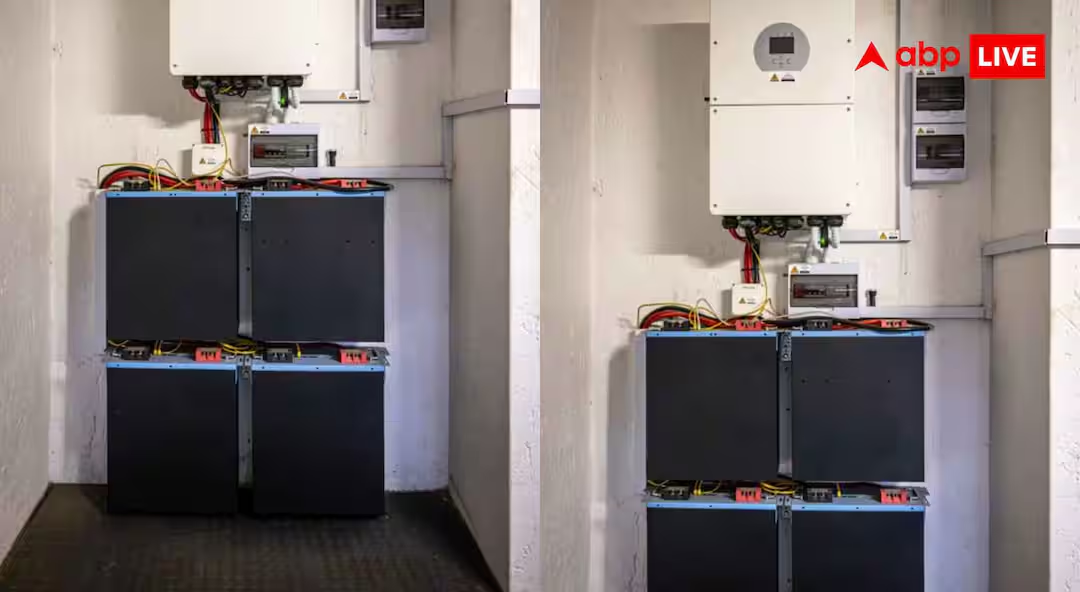
Inverter Battery Water Tips: Today, inverter has become a necessity for almost every home. Whether there is a power outage in the scorching heat or there are long power cuts during the rainy season, the inverter helps in keeping the lights, fans and important devices of the house running, but many people complain that their inverter battery does not last long, gets discharged quickly or starts deteriorating within a few years. Many times, the reason for quick deterioration of the battery is not due to any technical fault, but due to our small mistakes. The biggest mistake among these is pouring wrong kind of water in the battery.
During the rainy season, a question often arises in people’s mind whether rain water can be poured into the inverter battery. Many people believe that rain water is absolutely clean and natural, hence it will be safe for the battery also. Many such claims are seen on social media also. In such a situation, let us know whether rain water should be poured into the inverter battery or not and what experts say about it.
Why does inverter battery get damaged quickly?
Many people do not pay much attention to the care of the inverter after purchasing it. Especially carelessness is taken regarding the water in the battery. Some people store rain water and some even put tap water or RO water in the battery, but the use of wrong water gradually reduces the working power of the battery. Due to this, the battery starts discharging quickly and its lifespan also reduces.
Should rain water be put in battery?
According to experts, rain water should not be poured into the inverter battery at all. Rain water certainly looks clean, but dust, soil, pollution, gases and many other small particles present in the air can be found in it. Especially in cities, rain water may contain trace amounts of chemical elements. This can affect the chemical processes taking place inside the battery, which has a negative impact on both the capacity and lifespan of the battery.
Which water should be poured into the battery?
Only distilled water or demineralised water should always be used in inverter batteries. This is a special type of clean water, which does not contain minerals, salt and other impurities. For this reason it is considered safe for the battery. Keep in mind that RO water is also not considered a good option for batteries, because some amount of dissolved elements may be present in it.
What harm can happen from pouring rain water?
1. Battery starts discharging quickly – Dirt can reduce the battery’s ability to store charge.
2. Battery life may decrease – Continuous use of wrong water can cause the battery to deteriorate quickly.
3. Plates may be damaged – Dirt can settle heavily on the battery plates, reducing their efficiency.
4. Risk of rusting increases – Disturbances in chemical reactions can increase the chances of rusting inside the battery.
5. Performance becomes weak – The battery is not able to provide as much backup as before and its capacity gradually starts reducing.
Also read – Telegram banned till NEET re-test! Know how the entire app gets closed in one go.
After how many days should the battery water be checked?
For good performance of the battery, it is very important to check the water level from time to time. Check the water once every 45 to 60 days. In summer it is better to check the level once a month. If the inverter is used a lot, then the water should be checked frequently. Even if it is used less, it should not be left without checking for more than two months.
Also read – Telegram banned before NEET (UG) 2026 Re-Exam, know how it is used in paper leak