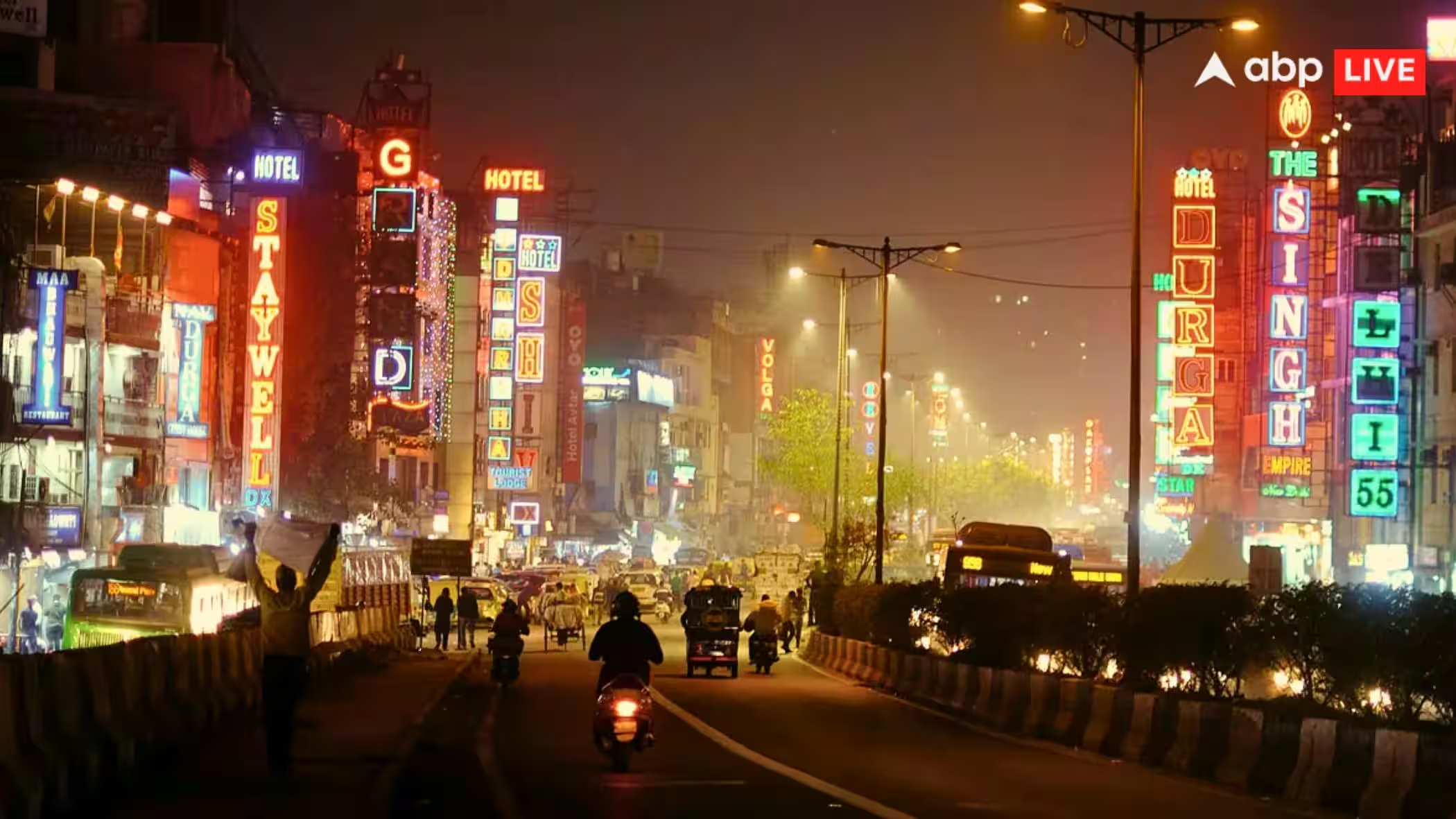
Everyone knows the heat of the day in India, but now there is no relief even after the sun sets. The nights have become hotter than ever before and this trend is increasing rapidly. The Indian Meteorological Department (IMD) has warned that except some parts of Maharashtra and Telangana, the minimum temperature is going to be above normal in the entire country. At many places the minimum temperature has increased by 6.4 degrees Celsius above normal. According to IMD, when the minimum temperature is 4.5 to 6.4 degrees above normal, it is called ‘warm night’ and more than 6.4 degrees is called ‘severe warm night’. These hot nights have now become common, but why and how? Let us understand in the explainer…
Question 1: Why is the heat increasing at night in India?
answer: Nights have now become a major part of the country’s heat crisis. There are two big reasons for this. One is global climate change and the other is increasing urbanization in cities. Concrete, asphalt and glass absorb the sun’s heat throughout the day and slowly release it at night. Tall buildings block the direction of wind, due to which heat gets trapped near the ground.
According to research reports on heat, 60 percent of the increase in night temperature in cities is due to local warming, while 40 percent is due to greenhouse gases. Along with this the humidity is also increasing. Humidity in cities in North India increased from 30-40 percent to 40-50 percent between 2012-2022.
In Delhi, Chandigarh, Jaipur and Lucknow this increase was 6-9 percent. Due to excess moisture, sweat does not dry up and the body is not able to cool down. Running the air conditioner releases more heat outside, creating a feedback loop. This problem increases further during El Nino. El Nino is developing this year, so the winter of 2026 and summer of 2027 are especially worth keeping an eye on.
Question 2: How fast are hot nights increasing?
answer: In 2025, ScienceDirect conducted a study of 40 years between 1980-2020. According to this, hot nights have increased by 2 to 8 days every decade, especially in Northeast, North-West and Peninsular India. The 2025 district-level report of the Council on Energy, Environment and Water (CEEW) says that out of 734 districts, 417 districts, or more than half, are in high or very high heat risk zones. These include Delhi, Maharashtra, Goa, Kerala, Gujarat, Rajasthan, Tamil Nadu, Andhra Pradesh, Madhya Pradesh and Uttar Pradesh.
76 percent of the entire country’s population lives in these high risk zones. The number of hot nights has increased in big cities between 2012-2022. There have been 15 additional very hot nights every summer in Mumbai, 11 in Bengaluru, 7 each in Bhopal and Jaipur and 6 in Delhi. According to the CEEW report, hot nights are increasing faster than hot days.
The city now feels like an ‘oven’ at night. Poor urban planning, less greenery, drying water sources, increasing concrete and three landfills have increased the heat. Hot nights have increased the most in big cities like Mumbai, Bengaluru, Bhopal, Jaipur, Chennai and Delhi. In the Smart City Study (2001-2024), Srinagar recorded the most intense day and compound heat waves, Dahod in Gujarat recorded the most intense compound heat waves and Varanasi recorded the most intense night-time heat waves.
Question 3: Why is it said that hot nights are more dangerous than days?
answer: Medical experts say that when it is hot during the day, the body cools down and recovers at night, but this relief is not available during hot nights. This increases the risk of dehydration, poor sleep, high blood pressure, fatigue, irritability and heat-stroke. The elderly, children and heart-lung patients are most affected.
Dr. Manjusha Aggarwal of Gleneagles Hospital, Mumbai says, ‘It increases the risk of dehydration, sleep problems, high blood pressure and heat related diseases. Frequent hot nights increase fatigue, irritability and persistent heat stress.
Due to hot nights, headaches, dizziness, fatigue, muscle cramps, dehydration and lack of sleep have become common. This can also cause loss of memory, concentration problems, anxiety and depression. Between 1998-2017, 1.66 lakh people in the world died due to heatwave. India recorded 48,000 heatstroke cases and 159 deaths in 2023, but the real number is higher.

Question 4: What is the impact on everyday life and economy?
answer: Working capacity is decreasing due to hot nights. According to the CSE report, India is expected to lose 5.8 percent of working hours (about 34 million full-time jobs) due to global warming by 2030. Running the AC at night increases the demand for electricity and the problem increases due to heat coming out. Laborers and outdoor workers have to endure the heat both day and night.
Question 5: So will those cool moonlit nights never return?
answer: According to a 2025 modeling study, between 2015-2100, hot nights could increase by 10 to 13 days per decade. Compound heatwaves will become more common. For safety, cool roofs, reflective pavements, more trees, better ventilation and less concrete are necessary in cities. Government and cities will have to improve urban planning. IMD is now warning about night temperatures also. Overall, if humans improve their daily routine, the environment will improve due to which cool moonlit nights can return.
Check out below Health Tools-
Calculate Your Body Mass Index (BMI)
Calculate The Age Through Age Calculator