- A robot vacuum showed data from thousands of homes.
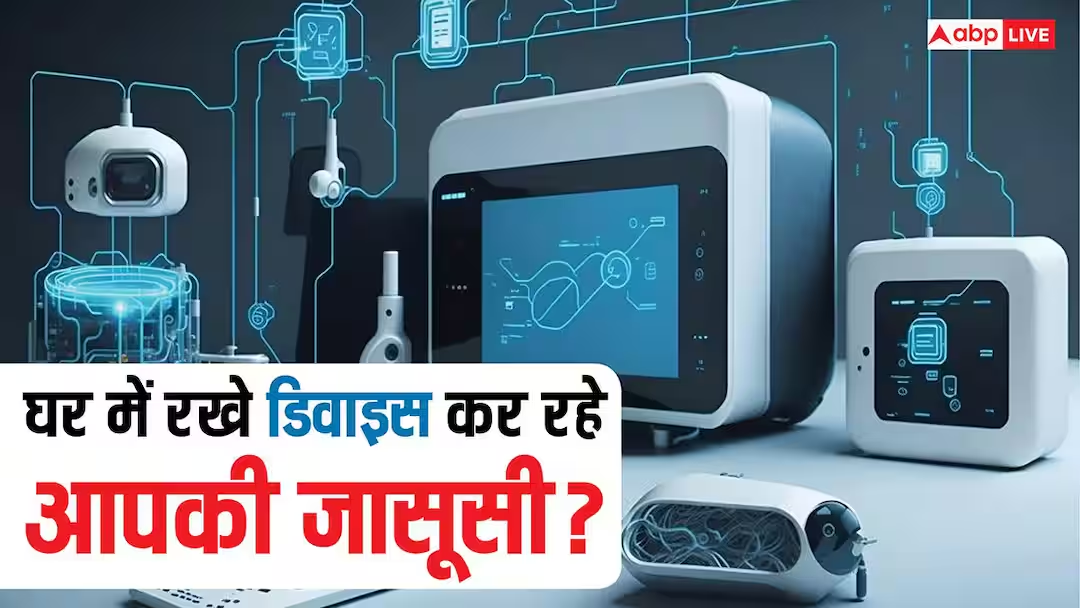
Internet Connected DevicesIf you look at any modern home today, you will find many devices that connect to the Internet. Smart TV, robot vacuum, smart camera and smartwatch kept in the living room keep records of your activities. All these devices are part of the Internet of Things (IoT) whose purpose is to make our lives easier and convenient. But there is a big question hidden behind these features that where does the data collected by these devices go?
Home has become a digital network
Smart home is no longer a thing of the future. Internet-connected devices like TVs, cameras, smart speakers, doorbells, baby monitors and robot vacuums have become a part of millions of homes. Low data prices, fast internet and cheap hardware have made these devices accessible to the common people.
However, what most people do not understand is that every smart device is actually a small computer that continuously sends and receives data through the Internet. This information often reaches the cloud servers of the manufacturing companies where it is processed and stored.
How do smart devices talk to each other?
Many IoT devices use a communication system called MQTT. If we understand it in simple language, it works like a postal service for machines. Devices do not communicate with each other directly but exchange messages through a central server. For example, a robot vacuum sends information about its battery, cleaning condition, and mapping to a server, which is received by a mobile app.
This system remains secure only when only the right people are allowed to access the data. If this control becomes weak then your personal information can reach unknown people.
What is a backdoor and how dangerous is it?
In the world of cyber security, a backdoor is a way through which a person or software can access a system by bypassing normal security methods.
Many times this happens due to poor design or programming. On the other hand, in some cases, software has also been found inside the devices that use the Internet connection for other activities without the owner’s knowledge. In such a situation, the device continues to do its normal work but can also work for someone else behind the scenes.
Information about thousands of houses exposed by robot vacuum
A recent incident involving a robot vacuum raised serious questions about smart device security. A software engineer studied the network system of his vacuum to control it.
During the investigation, it was revealed that due to lack of security on the server, information about thousands of other devices was also visible. This included floor maps of houses, camera feeds and other sensitive data. The most surprising thing was that it did not require any difficult hacking technique. The problem was in the authorization present on the server. This incident proved that sometimes the danger lies not in the device but in the cloud system running it.
Also read:
iPhone battery damaged by 80%? Before selling, know what will be the resale value of the phone.