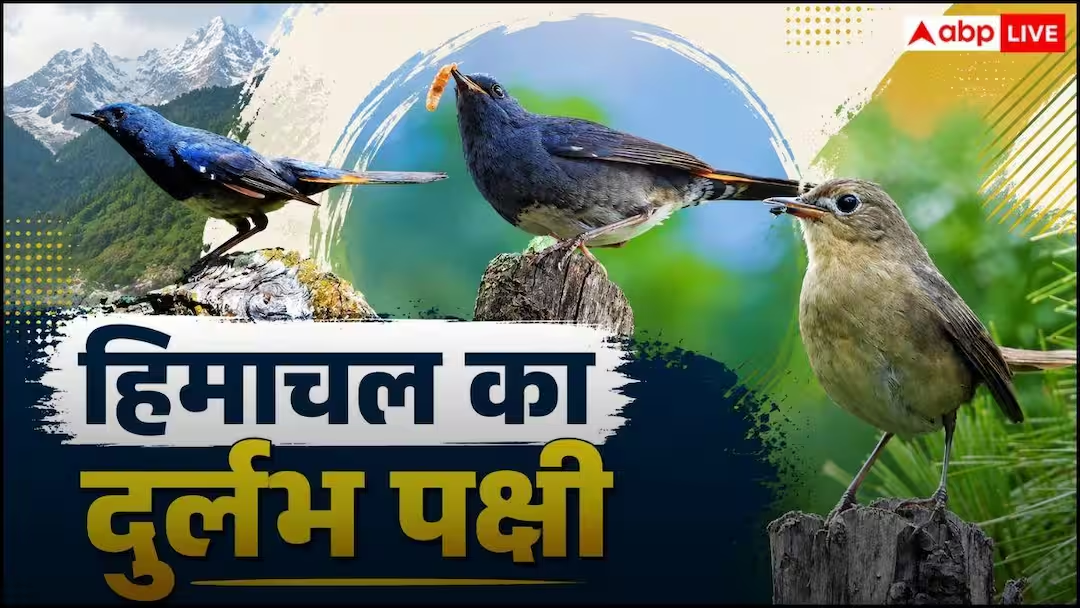
These days, Rakcham-Chitkul Wildlife Sanctuary located in Kinnaur district of Himachal Pradesh has become a favorite breeding site of the rare and beautiful Himalayan bird White-bellied Redstart. From May to September, this shy songbird makes its nest and breeds in the bushes at high altitude here. Wildlife experts believe that this bird is an important indicator of the health of the Himalayan ecosystem.
Why does this bird come to Himachal?
The scientific name of the White-bellied Redstart is Luscinia phaenicuroides. Every year after the snow melts, it returns to the high altitude bushes of Rakcham-Chitkul sanctuary. This bird spends its breeding season among the dense bushes of Kashmal, Juniper and Buransh. Its melodious whistle and shrill ‘tuk-tuk’ call make its presence felt, while it itself remains hidden in the bushes.
What does this bird look like?
According to experts, the male bird looks very attractive due to its grey-blue color, white belly and red-brown tail, while the brown color of the female helps it to remain hidden in the natural environment. This bird nests at an altitude of 2800 to 4000 meters and usually lays two to three blue or blue-green eggs.
Presence of birds confirmed at many places
According to Santosh Kumar Thakur, regional coordinator and forest officer of Bird Count India, breeding of this bird has been confirmed at seven to eight places in the sanctuary in the last two breeding seasons. He says that if systematic surveys are conducted, many more such breeding sites can be revealed. During the breeding season this bird mainly depends on the larvae of insects.
What are the habits of this bird?
Wildlife experts say that dense bushes like Kashmal and Juniper provide this bird a safe environment for nesting and protection from predators. With the arrival of winter this bird migrates towards lower and relatively warmer valleys. Experts have called continuous research, monitoring and habitat conservation extremely important for the conservation of this species.
Deputy Commissioner Kinnaur Dr. Amit Kumar Sharma said that the rich natural heritage of the district is its biggest strength and it is the responsibility of all of us to preserve it. At the same time, Forest Department officials said that the increasing breeding records in Rakchham-Chitkul Sanctuary are a positive sign towards Himalayan biodiversity conservation.
Also read: These temples of India look no less than heaven in monsoon, definitely visit here in monsoon.