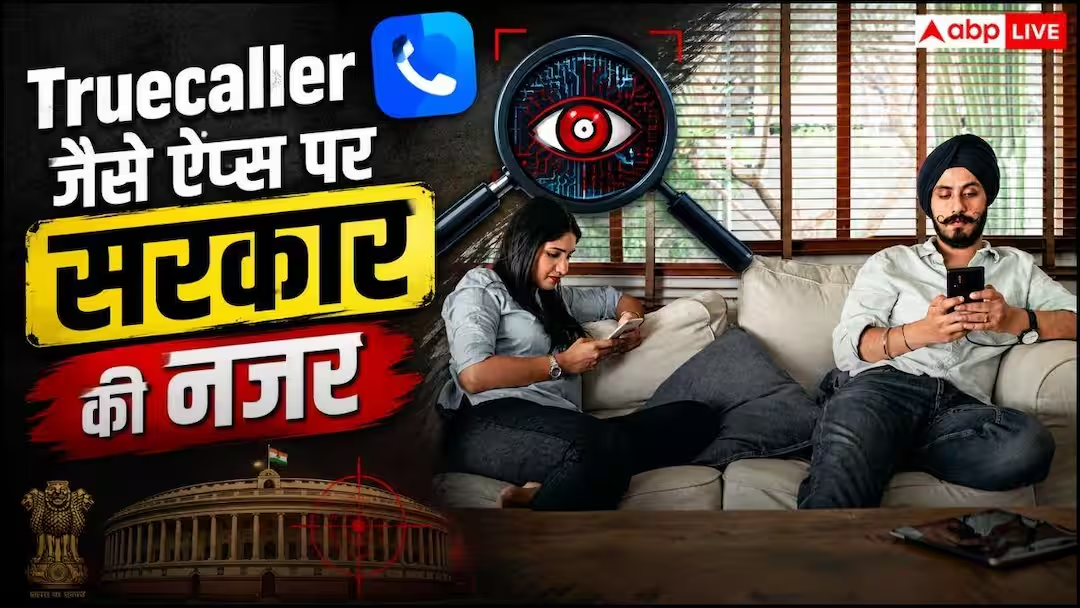
Till now the rules related to spam calls were applicable only to telecom companies, but now call management apps like Truecaller, Hiya and Whoscall have also come on the radar of the government. The reason is that these apps declare or block 140 and 1600 series numbers as spam.
What is 140 and 1600 series?
TRAI had created these two special number series so that the common man can know what kind of call is coming from the front. 140 series is for telemarketing i.e. promotional calls, while 1600 series is for important calls of services like bank, insurance, hospital, airline and courier. The government believes that when apps like Truecaller start showing even these authorized numbers as spam, then important calls like payment alerts, account updates and delivery are not able to reach people.
TRAI asked for new rights
Actually, apps like Truecaller are not telecom companies. These are considered intermediaries under the IT Act, hence TRAI cannot take direct action on them. This is the reason why TRAI has sought the status of Authorized Agency under the IT Act. According to reports, MeitY has given in-principle consent to this demand. If this system is implemented, then for the first time TRAI will get a way to send notices to these apps and take action if they break the rules. It has even been said in the proposal that if the rules are repeatedly broken, the legal protection under Section 79 of the IT Act can be taken away from such apps.
Truecaller replied with figures
Truecaller says that just because the number is 140 or 1600 does not make a call trustworthy. The company has stopped showing Spam labels on these numbers following TRAI’s instructions, but it claims that the result was opposite. According to the company, people do not answer more than 5 crore calls every day from these two series. The company’s figures show that in the last 8 months, users ignored 81 percent of 140 series calls and 79 percent of 1600 series calls, which means that due to information being hidden, people are disconnecting every unknown call considering it suspicious.
Also read: Is Airtel really sending such invitations to customers? Know the truth of the viral message and its purpose
Industry also against
IAMAI, an organization of digital companies, has also opposed TRAI’s proposal. The organization argues that the apps come under the purview of IT Act and MeitY, not the Telecom Act. Also, making apps share their spam data with telecom companies is like snatching the information that the companies have collected through years of hard work.
Now what next?
Now the fight is between delivering important calls and stopping spam calls. The government wants that calls from authorized numbers should not be wrongly reported as spam, while the apps say that this will further increase the risk of unwanted calls to the people. After MeitY’s in-principle consent, now the ball is in the government’s court as to when and with what conditions TRAI gets this new power.
Also read: Meta’s new AI tool gives new tension, anyone can use your Instagram photos