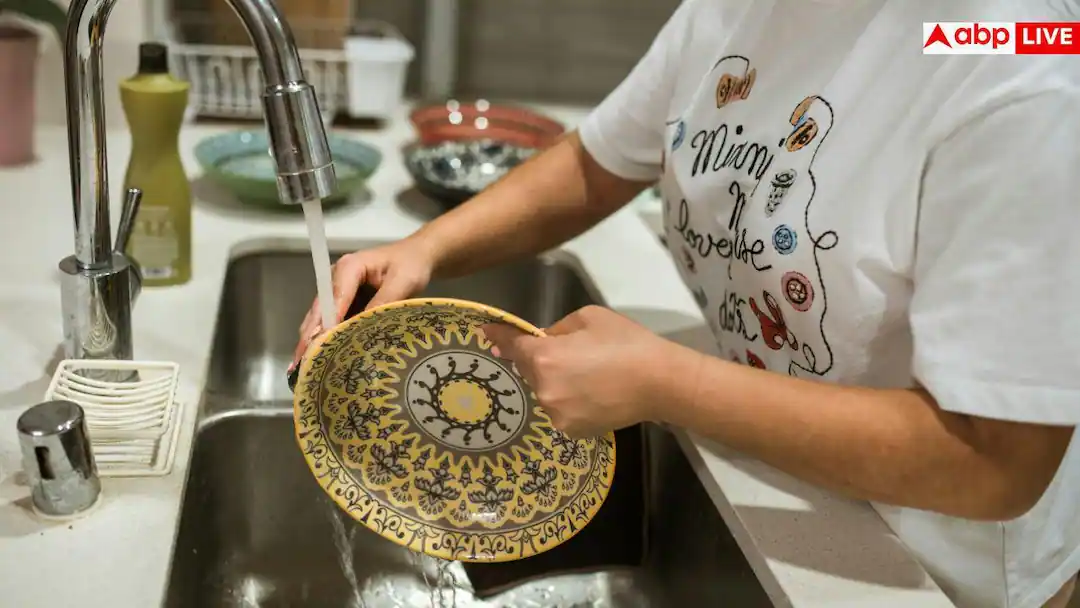
Why Hand Washing Dishes Is Not Enough: Washing dishes by hand in the kitchen is a relaxing task for many people, especially when you have cooked the food yourself. Seeing the shining utensils, we feel that they have been completely cleaned. But the truth is a little different. Merely being clean in appearance does not guarantee actual cleanliness. We often check utensils by looking at them in the light and are satisfied when no stains are visible. But recent studies show that our eyes can deceive us. Utensils may appear clean, but invisible dirt and bacteria may remain on them, which affect our health.
Why do bacteria remain?
The real problem is that while washing utensils by hand, we are not able to control the temperature and pressure of water. Water is as hot as our skin can handle, which is often not enough to completely break down fats and proteins. This is the reason that sometimes a light layer remains on the utensils, in which bacteria can grow.
Read this also- Balcony Pigeon Control Tips: Pigeons have made the balcony of your house their home, know the way to drive them away easily.
What came out in the study?
In an important study published in the American Journal of Public Health, more than 1000 places were surveyed. It was found that washing utensils by hand often leaves behind dirt which is not visible to the eyes. It was also revealed that scrubbing and soaking can spread the bacteria here and there instead of removing them completely. The choice of soap also matters a lot. We often use the cheapest or available detergent, but the chemistry of every soap is different. Some soaps create a lot of lather, but they are not as effective in breaking down dirt. In such a situation, instead of cleaning the utensils, only a thin layer of dirt remains on them.
What to keep in mind for dishwasher machines?
Dishwasher machines, on the other hand, provide better cleaning at higher temperatures above 60°C and with correct cycles. But here also caution is necessary. Short or quick-ending cycles are not able to clean all types of dirt. Especially for stains like starch or soil, a longer cycle is necessary. If utensils or tools are heavily soiled, such as soil, oatmeal, or raw food debris, a biofilm can form on them, which becomes difficult to remove. In such situations, detergents containing enzymes prove to be more effective. Another important thing is to keep the dishwasher filter clean. If the filter is dirty, the same dirt can return to the utensils again.
Read this also-History Of Hormuz: Did people live in the Strait of Hormuz, where did they go, why did they leave this place?