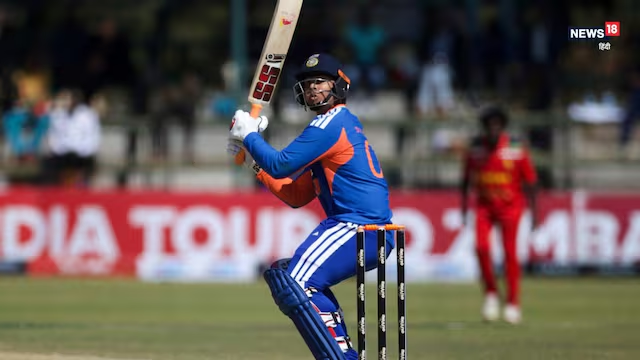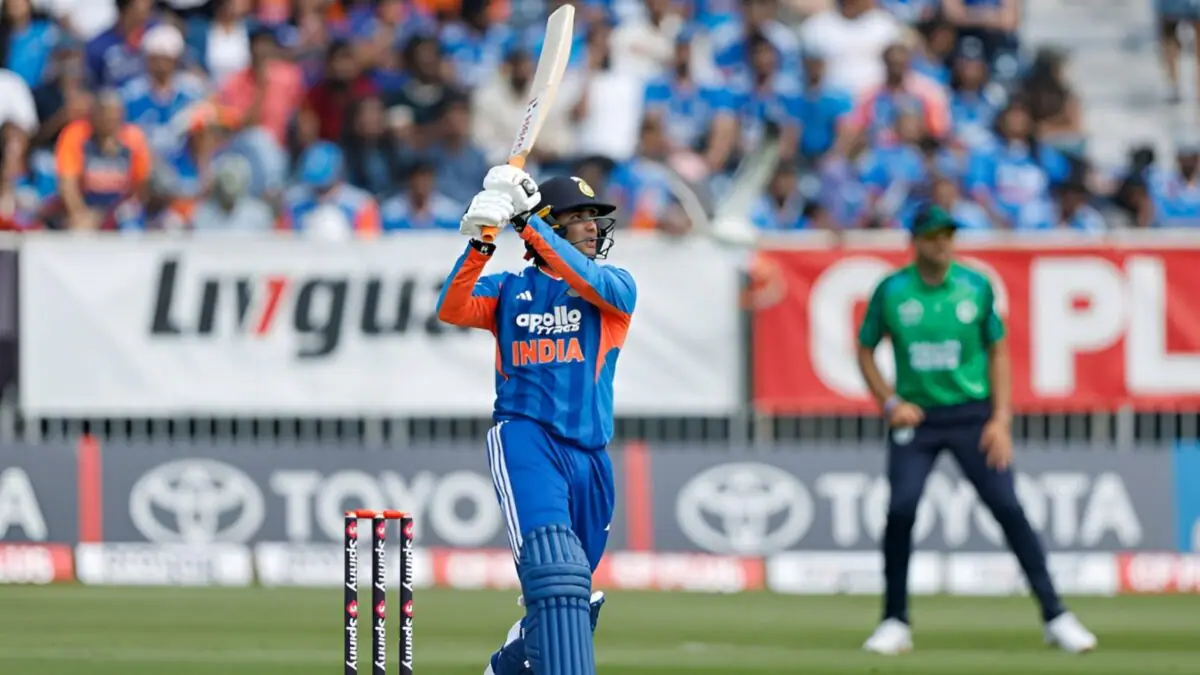
New Delhi. There is a different thrill of records, figures and celebrations on the cricket field. But sometimes a small mistake on the digital scoreboard spoils the entire happiness of the player. A similar strange incident happened with the rising star of Indian cricket Abhishek Sharma. In the first T20 match played against Ireland in Belfast, Abhishek Sharma felt that he created havoc with the bat on the field and scored a stormy half-century (50 runs) in just 20 balls. He also celebrated it, raised his helmet and accepted the greetings of the spectators and the dressing room, but after the end of the match, when the players of both the teams returned to the pavilion, the story had completely changed.
When the official scorecard came out after the completion of 40 overs of both the innings of the match, everyone was surprised. After rectification of a scoring mistake, Abhishek Sharma’s score was reduced from 50 to 49 runs (20 balls). That means the half-century he celebrated on the field was never recorded in the record books.
How this illusion of ‘one run’ started
This whole confusion started on the last ball of the second over of the Indian innings. Abhishek Sharma had set foot on the crease and was seen in an aggressive mood. The bowler bowled a length delivery towards the leg side, on which Abhishek tried to play a pull shot. However, instead of hitting his bat, the ball directly hit his thigh pad and rolled towards fine leg. Meanwhile, both the batsmen ran and completed one run. The official scorer present on the field initially considered it to be a run from Abhishek’s bat and added one run to his personal account. Since things change very fast during a live match, no one noticed it immediately.
Abhishek Sharma’s fifty goes awry.
Decision changed after review
When the match progressed and the technical team saw the replay of this ball again, it became clear that the ball had not hit Abhishek’s bat but his pad. According to the rules of cricket, this should not have been considered a run by the batsman but a ‘leg-by’ (extra run). This decision was revised on the back-end during the match itself. This improvement did not affect Team India’s total score, as the run was still added to India’s account, but Abhishek Sharma’s individual score was reduced by one run and that run was added to India’s list of ‘extra’ runs.
‘Incomplete’ celebration celebrated on the field
Unaware of all this paperwork and technical proceedings, Abhishek Sharma was enjoying his explosive batting on the field. Only the initial entry made by the scorer was running in his mind. When he played his 20th ball, he felt that he had completed his fifty. He waved his bat in the air with full enthusiasm and celebrated his half-century. The fellow players standing at the non-striker end and the coaches and players sitting in the dressing room also stood up and applauded.
Abhishek was not at fault
During the match, the only information the batsmen have is that which is visible on the big scoreboard of the field. Since there was no improvement update at that time, it was completely natural for Abhishek to believe and celebrate his half-century.
What does ICC rule say?
Due to such changes in the scorecard after the end of the match, questions are arising in the minds of many cricket fans that can the score be changed after the end of the match? The answer to this is hidden in the ICC rules. Under Clause 16.8 of the ICC Men’s T20I Playing Conditions, umpires and scorers have the full right to correct mistakes even after the match is over. According to this rule, ‘If the players and umpires have left the field in the belief that the match is over, and the umpires subsequently discover that an error has been made in the scoring which affects the outcome of the match, they shall, subject to Clause 16.9, adopt the necessary procedure.’ However, in this India-Ireland match, this improvement of one run did not have any impact on the final result of the match (win-loss), but according to the rules, the umpires were obliged to inform the captains of both the teams about this improvement.
When can the scorecard not be changed?
This rule also includes a very important condition. As per Clause 16.9, changes to the scorecard are possible only unless officially agreed. The rules state that once the umpires have fully agreed and signed off on the accuracy of the score with the scorer at the end of the match, no changes can be made to the scorecard. In this case, the mistake was caught before the umpires finally agreed, due to which Abhishek Sharma’s valuable run was removed from his account.