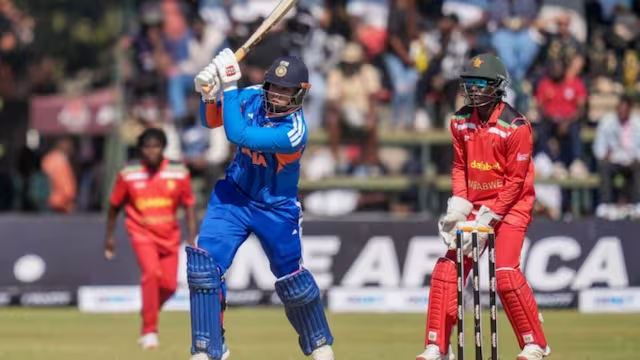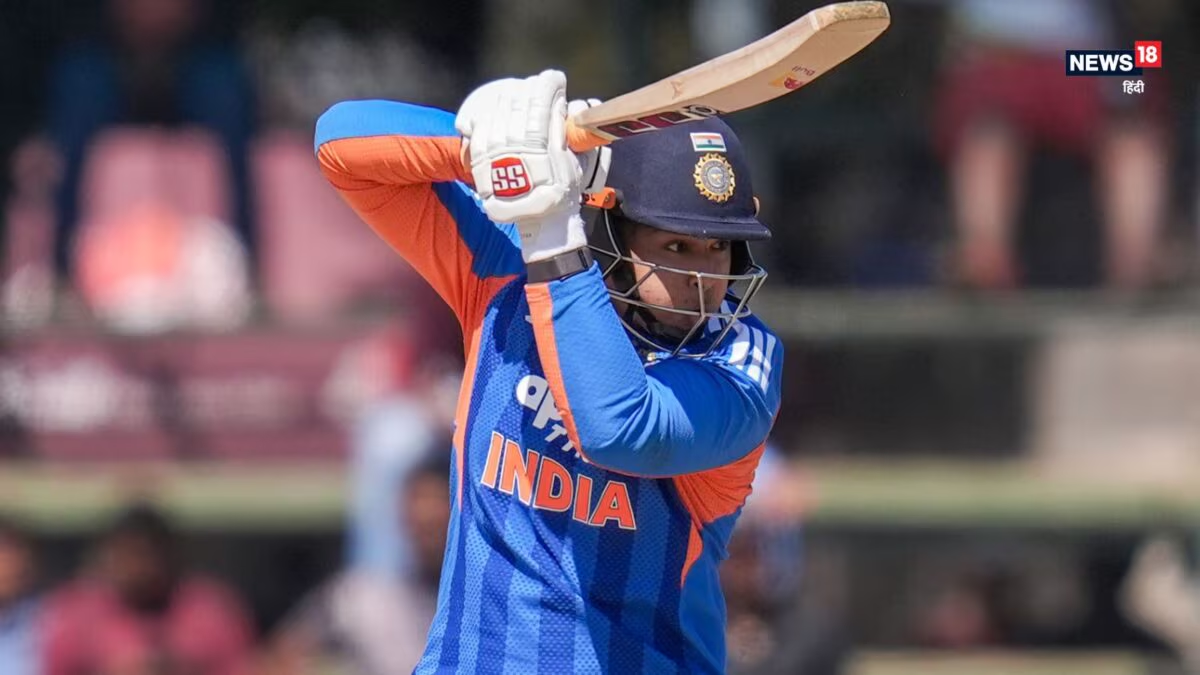
New Delhi. Indian cricket’s rising star Vaibhav Suryavanshi has made another historic achievement in his name. As soon as the 15-year-old batsman completed his half-century in the third T20 match against Zimbabwe, he created a world record which no batsman had been able to do before. Vaibhav hit fifty in 31 balls for Team India who came to bat first. To reach his half-century, Vaibhav also hit 6 fours and 2 sixes. This was also the second half-century of his T20 International career. Vaibhav has become the first batsman to score two T20 International fifties at the age of 15.
Vaibhav created history
In the first T20 International against Zimbabwe, Vaibhav had created history by playing an inning of 50 runs in 19 balls. He became the youngest player to score a fifty in T20 International. Now Vaibhav made another record with his second half-century in three matches. Not only in T20 International, Vaibhav is also the first batsman to score two half-centuries in male international cricket before turning 16 years old. Kushal Malla of Nepal has done this once.
Played an excellent inning of 81 runs
After scoring a half-century, Vaibhav Suryavanshi was rapidly moving towards a century, but a wonderful catch by Brad Evans ended his innings at 81 runs. Vaibhav returned to the pavilion disappointed. He knew that the pace at which he was batting had a good chance of completing a century. However, this inning of 49 balls of Vaibhav was brilliant. He destroyed the Zimbabwean bowlers by hitting 8 fours and 4 sixes.
Took over the innings after Abhishek was out
India’s start was not good. Opener Abhishek Sharma returned to the pavilion in the second over after scoring 2 runs in just 4 balls. The team’s first wicket fell at the score of 20 runs in 1.5 overs. In such a situation, the big responsibility of handling the innings fell on Vaibhav Suryavanshi and he did not disappoint. After the initial shock, Vaibhav along with Ishan Kishan took charge of the innings. Both of them made a brilliant partnership of 75 runs in 50 balls for the second wicket. During this period, Vaibhav continued his aggressive batting and scored 39 runs in 24 balls, while Ishan Kishan contributed 29 runs in 26 balls. This partnership brought India out of the difficult situation and took the score to 95 runs in 10.1 overs.
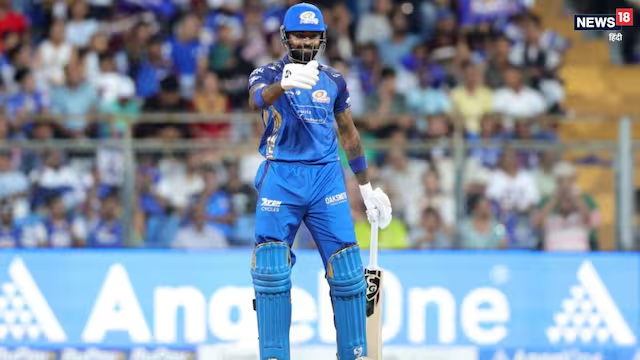
After the dismissal of Ishan Kishan, captain Shreyas Iyer came to the crease. Vaibhav showed excellent coordination with him also. Both of them added 50 runs in 29 balls for the third wicket. In this partnership, Vaibhav scored 31 runs in 18 balls, while Shreyas Iyer played a quick inning of 18 runs in just 11 balls. Both the batsmen did not allow the run rate to slow down and maintained constant pressure on the Zimbabwean bowlers. India got its third blow in the form of Vaibhav. By the time he was out, India’s score was 145/3 in 15 overs.
India won the toss and chose batting
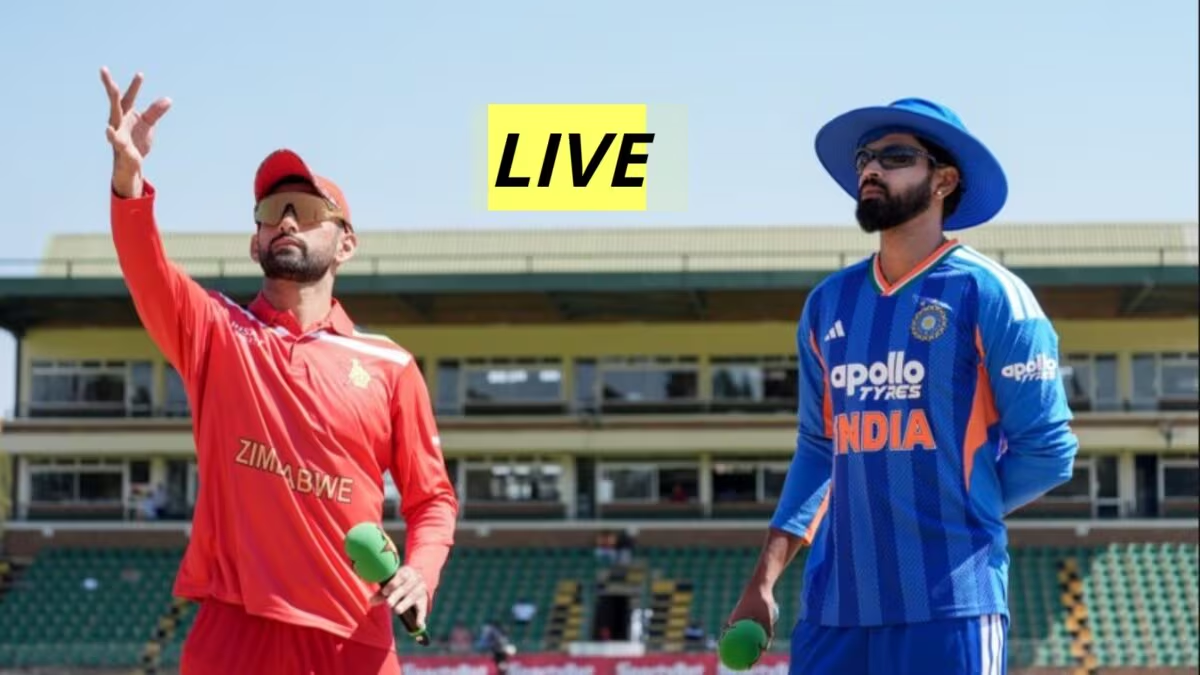
After winning the toss in this third T20, Shreyas Iyer decided to bat. The Indian team entered this match with two changes. Ashok Sharma was given a chance in place of Prince Yadav, while Suryansh Shedge was included in place of Shivam Dubey. On the other hand, Wellington Masakadza entered the Zimbabwe team in place of Richard Ngarwa.
India came out to clean sweep
India had won the first match of the series by 7 wickets. After this, they won the next match by 90 runs and took an unassailable 2-0 lead in the series. On one hand, India would like to win the third consecutive match, while on the other hand, host Zimbabwe will aim to save its honor by winning this match.
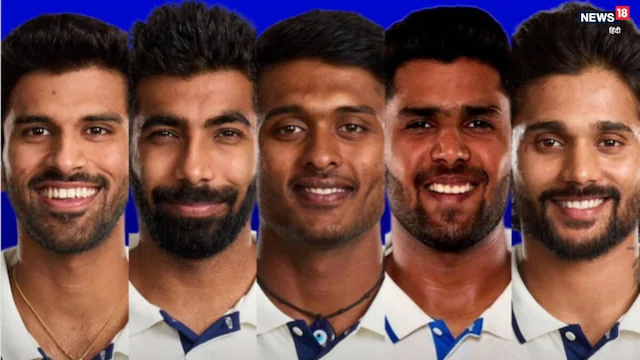
India’s playing eleven: Vaibhav Suryavanshi, Abhishek Sharma, Ishan Kishan (wicketkeeper), Shreyas Iyer (captain), Tilak Verma, Suryansh Shedge, Rinku Singh, Ravi Bishnoi, Yash Thakur, Mayank Yadav and Ashok Sharma.
Zimbabwe’s playing eleven: Brian Bennett, Ben Curran, Dion Myers, Sikandar Raza (captain), Ryan Burl, Wesley Madhevere, Tadivanashe Marumani (wk), Brad Evans, Newman Nyamauri, Wellington Masakadza and Blessing Muzarabani.