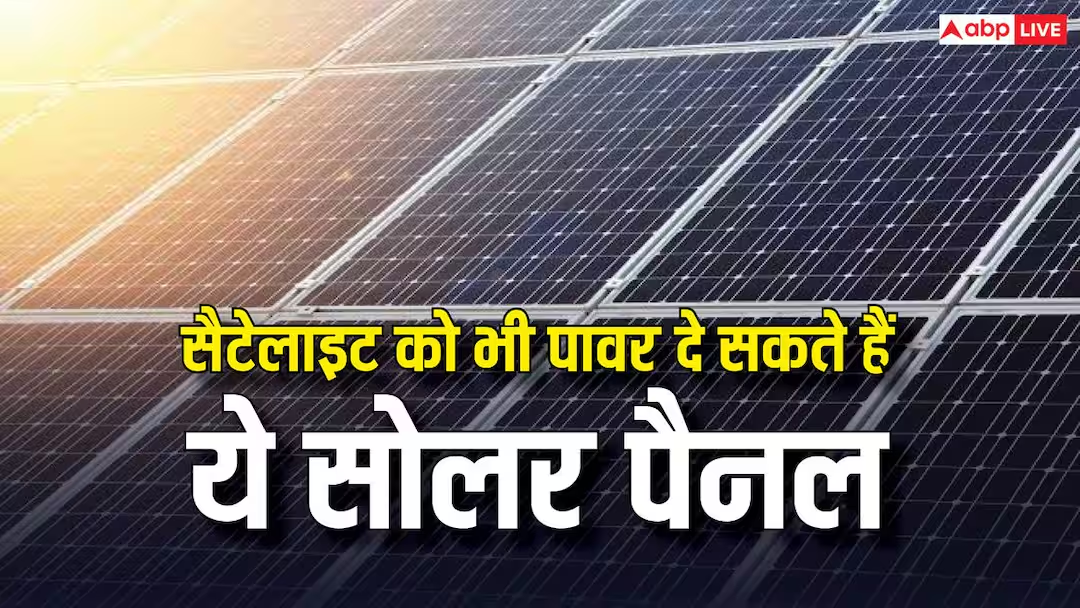
- Multi-junction solar cells are highly efficient, energy technology of the future.
- These create up to 47% of the energy from different semiconductor layers.
- High efficiency, stability making them suitable for satellite, drone.
- However, construction is expensive, complex and durability is a challenge.
Multi-Junction Solar Cells: Currently, traditional silicon solar panels and bifacial solar panels are being used for installation on homes. However, along with this, work is also going on on new technology and it is expected that in the next few years we will get closer to using Multi-Junction Solar Cells in the home solar energy system. These are panels whose efficiency is almost double that of existing panels and they can also be used to power satellites. Let us know about this new technology in detail.
What are Multi-Junction Solar Cells?
These are advanced solar panels, which are made by placing different layers of semiconductor materials like Gallium Indium Phosphide (GaInP), Indium Gallium Arsenide (InGaAs) and Germanium (Ge) on top of each other. Each of these layers can capture different wavelengths of sunlight. Each of its cells has its own separate PN junction, due to which these panels can convert more sunlight into electricity. The efficiency of these panels in concentrated sunlight is more than 47 percent and in standard conditions their efficiency is more than 33 percent.
What are the benefits of Multi-Junction solar panels?
We have already told you above that their efficiency is up to 47 percent. Since each layer in it captures different ranges of sunlight, energy wastage is very less. These panels are not affected by high temperatures and can work stably even at high temperatures. Talking about traditional panels, their efficiency reduces in high temperatures. Apart from this, Multi-Junction panel can also be used in those places where there is shortage of space. Therefore, they are considered perfect for satellites, drones, Mars rovers and space stations.
What are the disadvantages of Multi-Junction solar panels?
Manufacturing Cost- Manufacturing cost of these panels is high. If compared with traditional solar panels, they cost 2-2.5 times more to make. Apart from this, their manufacturing process is also quite difficult. For this reason, it still remains difficult to take their production to mass level. Durability also remains a concern. Delicate material is used to make these panels. It cannot withstand all types of weather like traditional solar panels. In the absence of direct sunlight, their efficiency also drops significantly.
Read this also-
The wait for IRCTC’s new website will end soon, beta version is coming first.