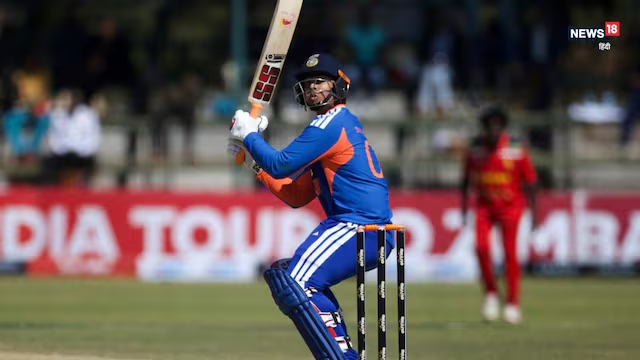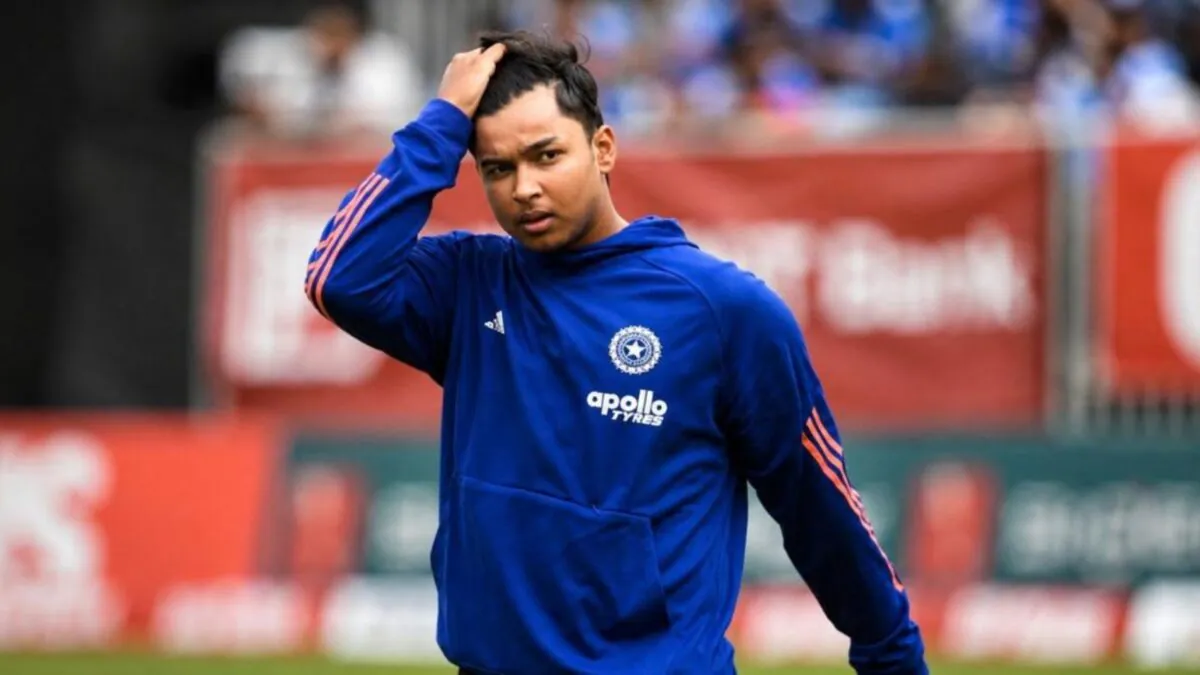
New Delhi. Runs appear in his name on the scoreboard, selectors see immense talent in him, people consider him an extraordinary player, but somewhere beneath the helmet and behind the growing fame, there is also a 15-year-old boy hidden who is still struggling with the uncertainties of adolescence. India is celebrating Vaibhav Suryavanshi’s rapid rise in the cricket world and is eagerly waiting for his debut. On the other hand, apart from his courageous batting and excellent restraint, there is also a secret discussion going on.
This is an issue that the sports world has been grappling with for decades: When children with extraordinary talent enter the adult world, how to ensure that their extraordinary talent does not have to be at the expense of a normal and ordinary childhood. The answer to this is not easy. If the basis of selection is only skill, then if Suryavanshi is in a position to play for India now, then he deserves it. His recent performance in IPL and other tournaments has clearly proved this.
The board changed itself for the child
The arrangements made for Suryavanshi, who went on tour with the senior team for the first time, show that this new cricket star is still legally a child. BCCI has allowed his parents to accompany him. On the other hand, under security rules in England, it is mandatory to arrange for a separate changing room for minors. A boy who is considered mature enough to face international fast bowlers, but is also young enough to need the necessary protection of childhood.
According to leading sports psychologist Keerthana Swaminathan, “A 15-year-old is a child before he becomes a star, but we often reverse this perception. We start considering him a star first and then a child. We have to understand what we can expect from a child. There should be room for him to make mistakes. He is still a child and he also has to work on his emotional and mental stability, this is a very difficult situation.
Earlier debut was easy for under age
From cricket to tennis, football to gymnastics, every generation has marveled at the youth who have been able to compete against players much older and physically stronger than them. Indian cricket has witnessed the debut of teenage players before. Sachin Tendulkar was just 16 years old when he stepped onto the field to face Pakistan’s dangerous fast bowling attack in 1989. History will remember him as perhaps the greatest batsman of his generation. But when Tendulkar started playing international cricket, there were no videos on social media analyzing every innings, there was no 24-hour television. In this, praise and criticism spread slowly.
Psychologist’s suggestion
Swaminathan said, “I don’t think security is the only solution. Now that he has jumped into the fray, the media will discuss, social media will discuss, and some people will discuss. In such a situation, the support of the parents is necessary to keep the child’s emotions under control. Sports psychology studies show that early success is not a problem in itself. The problem arises when too much is expected of children and their performance is monitored. History has ample examples of how the path from prodigy to champion is rarely easy, although there are also cases when a teenage prodigy has had a very good career, especially in women’s tennis.
Teenagers also took part in other sports
Jennifer Capriati became one of the biggest names in world tennis in her teenage years. Tracy Austin also mastered this sport in her adolescence, but injuries did not allow her career to last long. This shows that extraordinary talent often comes with extraordinary pressures. Even in cricket, we have seen such teenage stars whose career progressed in different ways. Some players like Tendulkar completely lived up to the expectations but others like Prithvi Shaw showed their talent but maintaining that performance at the top proved to be more challenging for them. Swaminathan said, “I have worked a lot with parents and coaches. I believe that such an environment should be created where talented players can grow as players and children. We talk to children as if we were talking to a 20 or 30 year old person. But we forget that they are actually 15 year old children.
Former South African cricketer Darryl Cullinan, who made his debut at a young age, recently talked about the disadvantages of introducing young players to the mainstream in his column for ESPN Cricinfo. He had said, “In my opinion he (Suryavanshi) should stay at home and prepare for his exams, play street cricket with his friends and live like a young boy as long as he has the chance.”
Treat your child as a child, not a star.
“This doesn’t mean his talent should be ignored,” Cullinan wrote. This means understanding that talent will be utilized properly only when that player is given a chance to develop holistically.” Former spinner Maninder Singh, who made his debut for India at the age of just 17, said, ”I was dropped from the team after the first two tours because I had taken only five wickets in eight Test matches. I couldn’t blame anyone for this. The umpiring in Pakistan and West Indies was very bad, but I did not perform well and I had to be dropped from the team. He said, “Even at that time there was a good system but now there is a better system which is proving effective.” Therefore, it is important to keep in mind that Suryavanshi is still a child before becoming a star player.