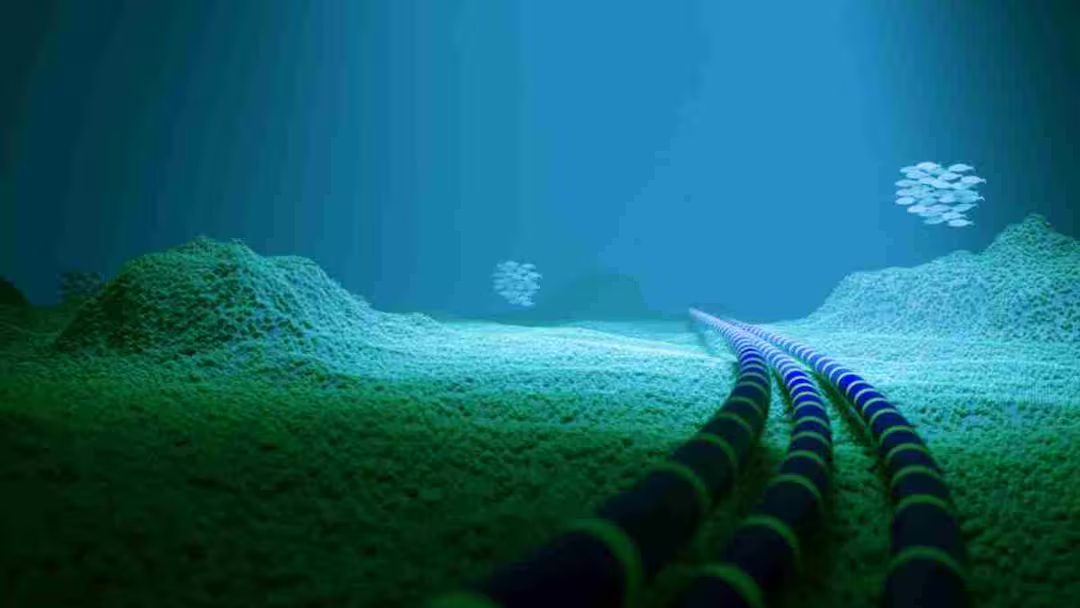
Undersea Internet Cable: A large part of the fast internet we use today runs through fiber optic cables laid under the sea. These cables connect continents and are considered the backbone of global communication. These thousands of kilometers long networks across the world transmit data from one country to another in a few seconds.
How much does it cost to lay one nautical mile of cable?
Laying cables in the sea is not an easy or cheap task. According to the information, usually the cost of laying one nautical mile (about 1.85 kilometers) of cable can be around 30,000 to 50,000 dollars (about 25 lakh to 40 lakh rupees). However, this cost depends on many things such as depth of the sea, rocks in the way, maritime activities and technical complexities. Laying cables in deep sea is cheaper to some extent whereas in coastal areas the work is more expensive.
vast network spread under the sea
Most of the world's internet runs through cables laid under the sea. There is about 14 lakh kilometer long cable network in the Pacific and Atlantic Ocean. Big tech companies like Google, Microsoft and Meta (Facebook) have a big contribution in laying these cables. The Atlantic Ocean connects Europe and America while the Pacific Ocean provides connectivity between America and Asia. Through these two, more than 95% of internet traffic reaches almost all the continents of the world.
How does Internet reach India?
International internet access to India mainly comes through the Red Sea and the Strait of Hormuz. There are about 17 undersea cables laid in the Red Sea and about 20 in the Strait of Hormuz. These include major lines like AAE-1, Falcon, Gulf Bridge International and Tata TGN-Gulf which connect India to the global data network. All these cables are connected to cable landing stations built in cities like Mumbai, Chennai, Kochi, Thoothukudi and Thiruvananthapuram in India. Internet is delivered to different parts of the country through these stations.
How are these cables laid?
These cables are laid in the sea with the help of special ships. First the seabed is surveyed and then the cable is carefully lowered. In shallow water they are protected by being buried under the sea so that they do not get damaged by ship anchors or fishing nets.
Also read:
Thinking of shifting from LPG to PNG? Find out in just 2 minutes whether there is a gas line in your city or not