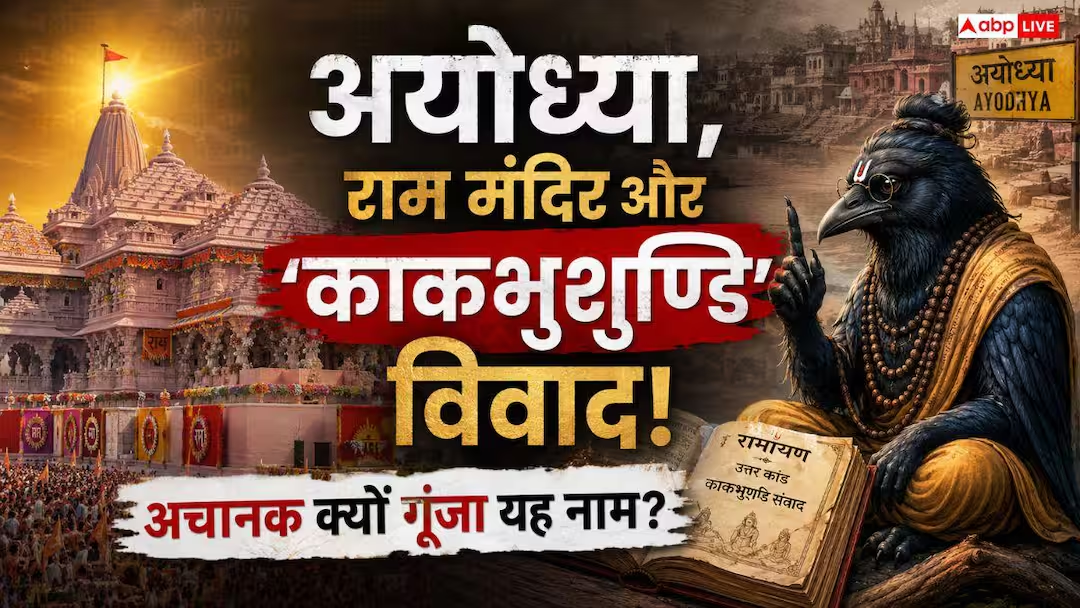
Ayodhya Ram Mandir, Kakabhushundi: After the construction and consecration of the grand Ram temple in Ayodhya, many such incidents and characters related to Sanatan tradition, Ramayana and Lord Shri Ram have suddenly come into discussion, about which common people knew very little earlier. Among these divine names, one name which is on the lips of every Sanatani these days through social media is, ‘Kakabhushundi’.
After all, who is Kakabhushundi? Why did he get the form of a crow and why is his place so important in Ramcharitmanas? Let us know the complete story of this mysterious and most glorious Ram devotee.
Who was Kakabhushundi?
written by Goswami Tulsidas Uttarkanda of ‘Ramcharitmanas’ A detailed and extremely divine description of Kakabhushundi ji is found in it. According to the scriptures, Kakbhushundi ji is an ardent and ardent devotee of Lord Shri Ram. His appearance is very unique, his face has a beak like a crow, while the rest of the body is like that of a divine man.
He is depicted in Hindu scriptures as a ‘Chiranjeevi’ (immortal) Mahatma, who has not only seen but lived the deeds of Lord Shri Ram in every era, going beyond the cycle of time.
How did a Brahmin become a ‘crow’? Know the story of the curse
According to mythology, Kakabhushundi ji in his previous birth was a very learned Brahmin of Ayodhya. He was a great devotee of Lord Shiva, but he had developed ego of knowledge. Once when he was worshiping Shiva in the temple, his guru came there. Due to ego, he did not stand up to respect his Guru.
Lord Shiva became angry at this rudeness of his devotee and through the voice of the sky, he cursed him to become a python. However, his merciful guru prayed to Lord Shiva for forgiveness. Melting with Guru’s prayer, Mahadev reduced the effect of the curse and said that after suffering for many births, you will finally attain Ram’s devotion.
In his last birth, when he was attaining knowledge in the ashram of a sage, the sage asked him to worship Nirguna Brahma instead of Saguna (realized) Rambhakti. But Kakabhushundi only wanted devotion to the child form of Shri Ram. Angered by this argument, the sage cursed him to become a ‘crow’ (kaak). Kakabhushundi accepted this curse smilingly considering it to be God’s wish.
When Garuda Dev’s ego had to be broken, then Kakabhushundi came in handy.
There is a famous incident of Ramayana period when Meghnad tied Lord Rama in ‘Nagpash’ during the war. At that time, at the behest of Devarshi Narad, the bird king Garuda came and freed Lord Ram by eating the snakes.
But after this a deep doubt (confusion) arose in the mind of Garuda Dev that “How can he who is God in reality get trapped in the trap of an ordinary demon? Is Ram really God?”
To clear this doubt, Garuda Dev first went to Lord Brahma and then to Lord Shiva. Then Mahadev told him that only Kakbhushundi ji can end this doubt. When Garuda Dev reached Kakabhushundi ji on Neel mountain, he narrated the story of Ram in detail to Garuda ji, due to which all the attachment and doubts of Garuda Dev were destroyed.
Got the boon of ‘euthanasia’ from Mahadev
Kakbhushundi ji’s exclusive Ram devotion and the divine Ram story coming from his mouth was so mesmerizing that even Lord Shiva himself once heard the story from him in disguise.
Pleased with his selfless devotion, Devadhidev Mahadev blessed him. Euthanasia Gave the boon of. Due to this boon, even time has no effect on them. They can leave their body whenever they wish or can live for ages.
After the Ram Mandir movement and the arrival of Ram Lala in Ayodhya, the curiosity to explore the hidden pearls of Sanatan culture has increased. This is the reason why the story of Kakbhushundi ji, the pinnacle of knowledge and devotion, remains a center of inspiration for every Sanatani today.
Aamir Khan Weeding: Aamir Khan Wedding Numerology, unique combination of number 5 and number 6, this amazing combination will happen with Gauri Spratt!
Disclaimer: The information provided here is based only on assumptions and information. It is important to mention here that ABPLive.com Does not constitute any endorsement or verification of information. Before implementing any information or belief, consult the concerned expert.