Ganguly’s ‘match winner’, who once wanted to become a truck driver, won with his stubbornness
Last Updated:
Harbhajan Singh birthday: Due to father’s demise and financial constraints, Harbhajan Singh had once decided to leave cricket and become a truck driver in America. Then the unwavering faith of his sisters and the trust of captain Sourav Ganguly changed history. Know the very emotional and inspiring story of the struggle of Team India’s great off-spinner ‘Turbanator’, the historic hat-trick, the magic of ‘Doosra’ and his rise from the floor to the top, which made him the world champion.
Harbhajan Singh wanted to go to America and drive trucks.
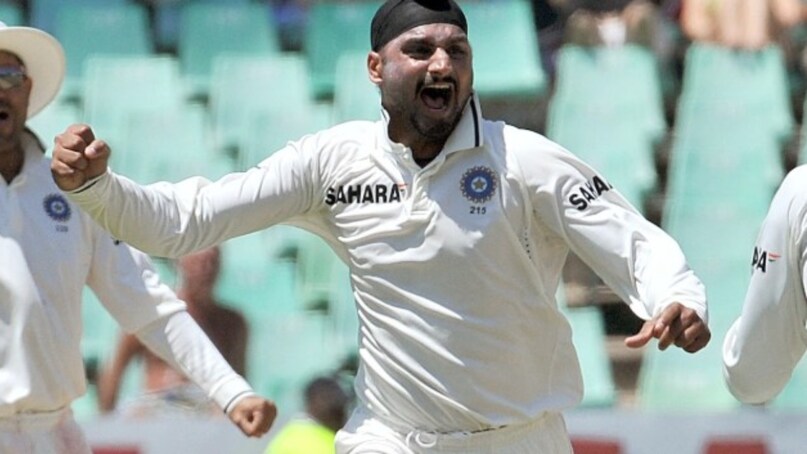
New Delhi. There are some stories in the pages of cricket history, which are not just about records, but they tell the story of a person’s unbreakable courage, struggle and reaching from the bottom to the top. Harbhajan Singh is one such name in the history of Indian cricket. Harbhajan Singh, known by famous names like ‘Turbanator’ and ‘Bhajji’, is counted among the greatest off-spin bowlers of the world, who forced the world’s great batsmen to dance on his spinning balls. He became the first off-spinner for India to take more than 400 wickets in Test cricket. But the path to reach this historic milestone was full of thorns.
Harbhajan Singh, born on 3 July 1980 in Jalandhar, Punjab, was passionate about cricket since childhood. After spreading the magic of his spin at the domestic level, he soon got a call to the national team. In March 1998, at the age of just 17, he started his international career by playing a Test match against Australia. He showed glimpses of his talent in the initial matches, but the path to international cricket was not so easy.
Harbhajan Singh wanted to go to America and drive trucks.
When I had made up my mind to become a truck driver
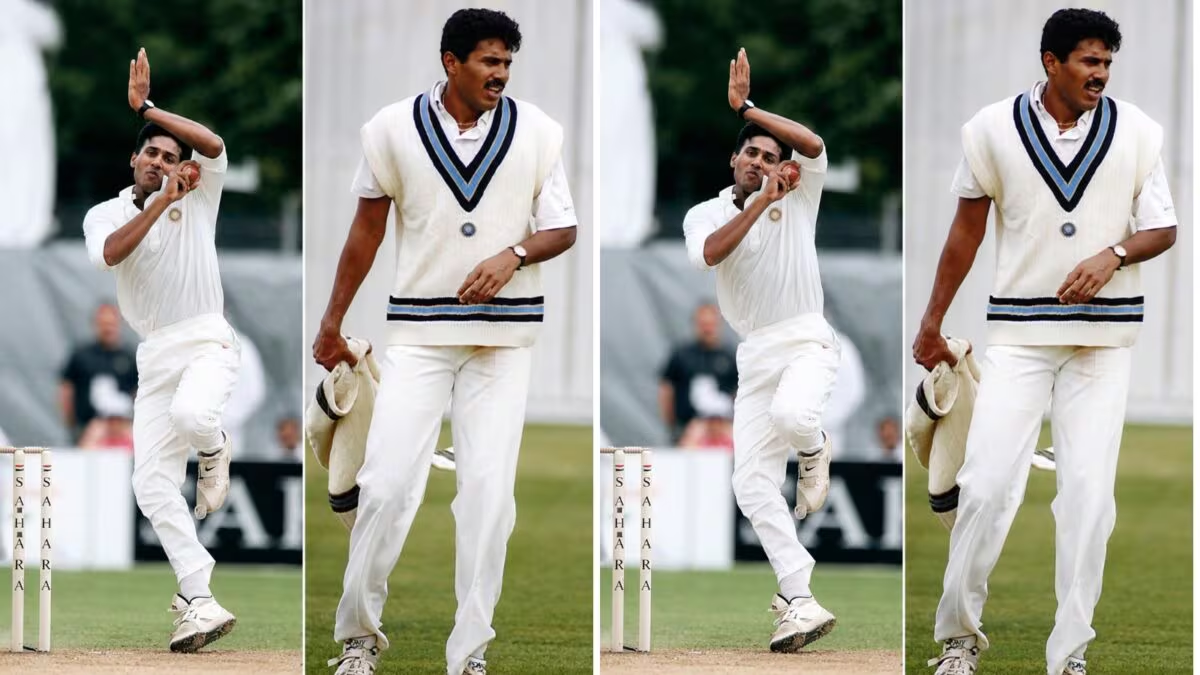
Only about one and a half years after the beginning of his career, Harbhajan Singh was dropped from the team due to poor form. Anil Kumble was the main pillar of Indian spin bowling during that period. Even when Kumble was injured, the selectors tried other players in place of Bhajji. This neglect deeply disappointed young Harbhajan. Meanwhile, in the year 2000, Harbhajan lost his father. Suddenly, the responsibility of the entire family (mother and five sisters) fell on his young shoulders. On one hand, the pain of being out of the team and on the other, the serious financial condition of the family, these twin crises had broken Bhajji from within. The frustration had increased to such an extent that he had made up his mind to leave cricket and go to America to become a truck driver to earn his living.
turning point that changes life
During this difficult time, Bhajji’s sisters did not let the cricketer within him die. He consoled Harbhajan and inspired him to come on the field again. On the strength of the sisters’ unwavering faith, Bhajji made a comeback in Ranji Trophy and bowled brilliantly in that season and took 28 wickets.
Ganguly’s confidence and historic comeback
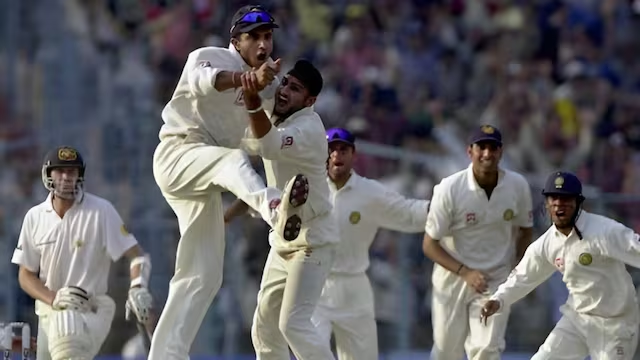
The year 2001 brought a new dawn for Indian cricket. Australia’s strong team was on the tour of India and Anil Kumble was out due to injury. In such a situation, the then captain Sourav Ganguly expressed confidence in Harbhajan’s talent and insisted on including him in the team. This decision of Ganguly proved to change the history of Indian cricket. In the 3 matches of this historic Test series, Harbhajan Singh took a total of 32 wickets while keeping the Kangaroo batsmen on his toes. In the Kolkata (Eden Gardens) Test of the same series, he took a brilliant hat-trick, which was the first hat-trick taken by any Indian bowler in Test cricket. This series not only revived Harbhajan’s career but also made him the main weapon of Team India.
The magic of ‘Doosra’ and the journey of the world champion
Harbhajan Singh’s biggest strengths were his aggression, never-say-die spirit and his mysterious ball ‘Doosra’. Despite being an off-spinner, this art of getting the ball outside put even the best batsmen of the world in dilemma. Bhajji was not only the king of Test but also of limited overs. He was a key member of India’s two biggest historical victories, the 2007 T20 World Cup and 2011 ODI World Cup winning team. Apart from this, his specialty was also to come down the order and score quick runs with his bat when needed.
About the Author

Kamlesh Rai is currently working as Chief Sub-Editor in News18 India. In his long journalistic journey of more than 17 years, he has created a unique identity with his deep understanding of the nuances of digital media and news.read more