- TRAI makes voice/SMS-only plans mandatory by 2026.
- The price of these plans will be less in proportion to the data plan.
- This is relief for the elderly, rural and low income people.
- There is a fear that data plans may be expensive.
TRAI: The Telecom Regulatory Authority of India (TRAI) has set an important deadline for telecom companies. By April 28, 2026, all operators will have to make changes in their tariff system and provide voice and SMS-only plans for every validity. It will also be necessary to display these plans clearly on the website, mobile app and retail outlets. This means that as many bundled plans as there are for data, voice and SMS for the consumer, there should be equal number of plans only for voice calls.
Will the plans be cheaper?
According to TRAI’s draft notification, now all the existing data, voice + SMS bundled plans will have to be offered a separate voice only plan of the same validity. The price of these plans will also have to be kept low according to the largely proportional reduction i.e. data.
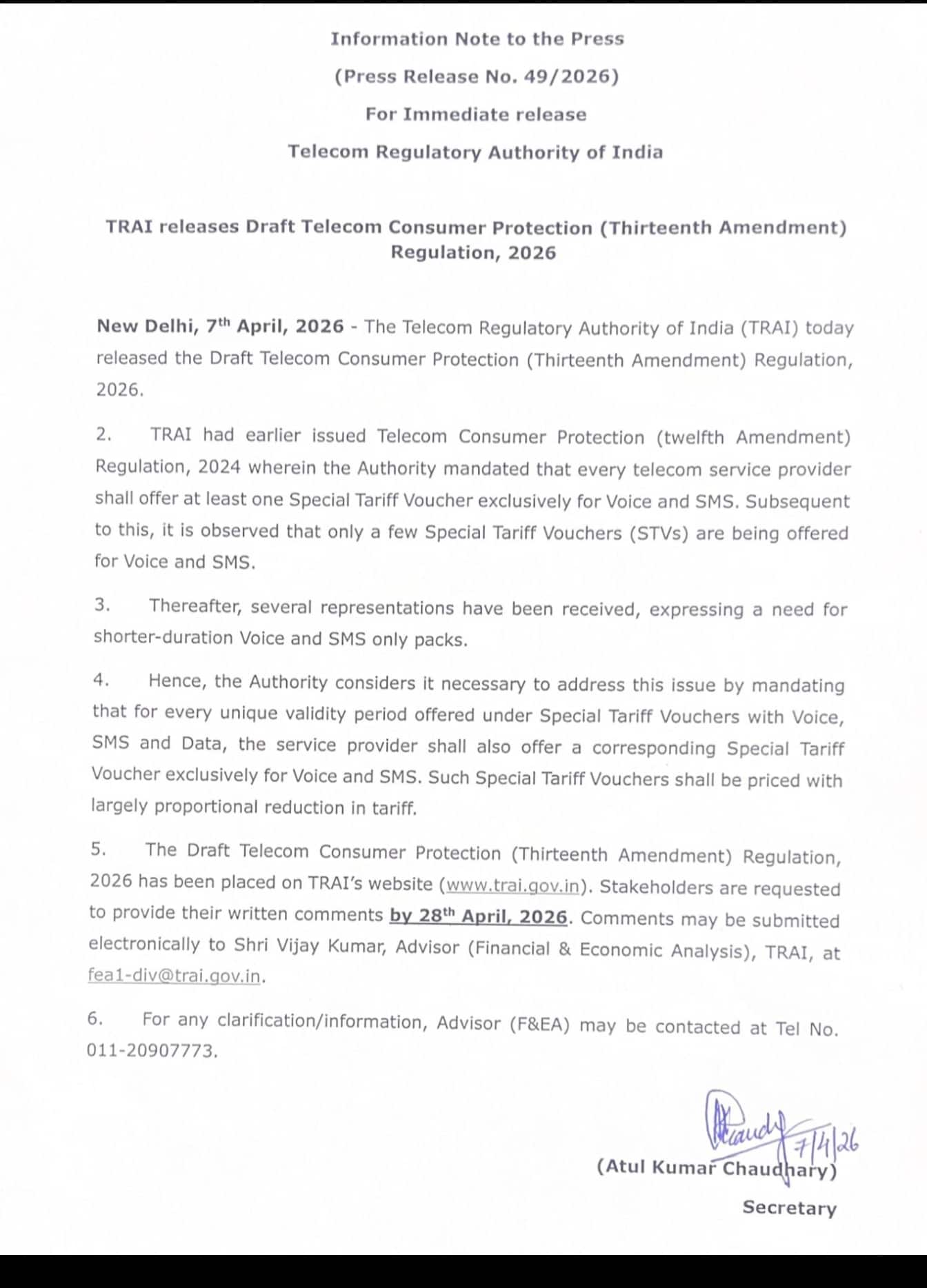
This decision was taken because according to TRAI, there are a large number of consumers, especially the elderly, rural and low income groups, who do not need data but are forced to take expensive data plans.
Will data plans be expensive?
Now TRAI’s new proposal has started a new debate in the telecom sector. On one hand, the move to only voice call plans may bring relief to those consumers who only use calls and SMS, on the other hand, there is a growing fear that data plans may become expensive in the future.
Direct intervention in tariffs after 20 years
In India, the policy of “tariff forbearance” has been in force in the telecom sector since 2004, under which companies were given the freedom to decide their own plans. For this reason, India has been included among the cheapest mobile data markets in the world. But now after so many years, this step of TRAI is different. For the first time after so many years, the regulator seems to be directly directing changes in the tariff structure where it is being made mandatory for companies to offer voice and SMS-only plans for every validity.
What relief for the consumer?
TRAI’s logic is clear, there are a large number of users in the country who do not need data but are forced to take expensive data plans. If this rule applies,
- Consumers will be able to choose the cheapest plan according to their needs.
- Elderly, rural and feature phone users will get relief
- The problem of “forced purchase of data” will be reduced.
The hit to the pocket may increase
But this is where the story changes. The telecom industry model runs on “bundled pricing” where data revenue keeps voice services affordable. If voice and data are completely separated then companies can increase the price of data plans. For most users who use both data + calls, the total cost may increase. The cheap plan will be a relief for some people but may prove to be an expensive deal for the majority of users.
Questions raised on forbearance model also
This step of TRAI is being considered different from the policy which included India among the cheapest telecom markets in the world. Now the question is arising whether more regulation
- Companies will have less freedom to set prices.
- Innovation in the market will be affected
- And in the long term prices may rise rather than remain stable
Now according to experts, the concern is that if data plans become expensive then it may affect the digital expansion of the country. In such a situation, if there is pressure on the earnings of companies, then the pace of network investment and expansion may slow down.
Also read:
AI Smartphone! Now your phone has become smarter, faster and more intelligent than before, know how the whole world is changing