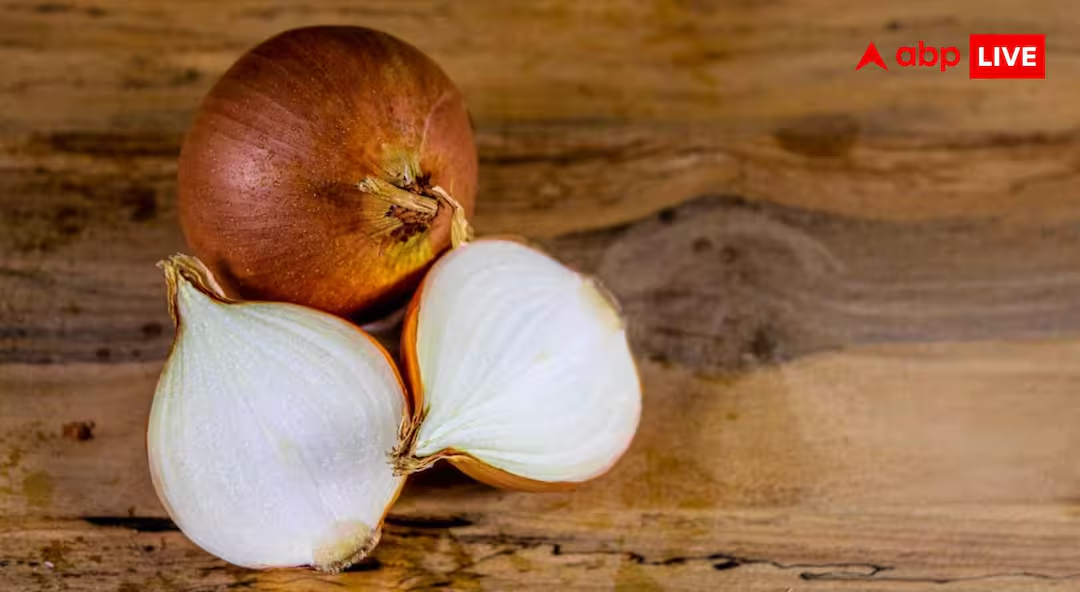
Onion For Heatstroke Prevention: As soon as the summer season arrives, the temperature starts increasing rapidly in many parts of the country. Strong sunlight, hot winds, heat wave and humid weather become a big problem for people. In such a situation, everyone adopts various measures to keep themselves cool and safe. Some people resort to cold beverages, while some rely on home remedies.
Among these home remedies, a very old and common remedy is keeping onion in the pocket or eating raw onion to protect from heat stroke. You too must have often heard the elders in your house saying this. Recently, the discussion on this matter started again when in a viral video a leader was seen telling onion as a way to prevent heat stroke. But the biggest question is whether onion can really protect from heat stroke, or it is just a traditional belief. So let us know whether eating onion really prevents heat stroke and how true is this claim.
What is heat stroke?
When the body temperature increases too much and the body’s cooling system (sweating) does not work properly, then heatstroke occurs. This can be a serious condition, with symptoms such as dizziness, excessive sweating or no sweating, vomiting or nausea, headache, unconsciousness or even coma. In such a situation, it is very important to immediately cool the body and give water and electrolytes.
Does eating onion really prevent heatstroke?
The belief regarding onion that keeping it in the pocket or eating it does not cause heatstroke, is not considered scientifically proven. According to doctors and medical science, heat wave occurs when the body temperature increases too much and the body is unable to keep itself cool, hence to avoid it, it is necessary to consume water, electrolytes and protection from sunlight. Do not keep anything in your pocket, although onion contains some nutrients and water which can give some support to the body, but it is not a reliable way to directly protect against heatstroke, so it is considered a traditional belief only.
How true is this claim?
This claim is not completely true. Onion is not a scientifically proven solution to directly protect against heatstroke, so it would not be right to depend completely on it. However, people consider it beneficial because onion contains elements like water, vitamins C and B6, potassium, magnesium and quercetin, which help in keeping the body hydrated, maintaining electrolyte balance and reducing mild swelling.
Benefits and disadvantages of eating onion
Raw onion can provide some benefits in summer, like making the body feel slight coolness, improving digestion and supporting immunity, but eating it in excess can also cause problems like gas, acidity and flatulence, and some people may find it hot. Therefore, it is better to eat it in balanced quantity, and if the spiciness is too much then you can eat the onion by soaking it in water or vinegar first. In Ayurveda too, onion is considered to be cooling and home remedies like roasted onion, chutney or juice have been suggested.
Also read – Pesticides Exposure Cancer Risk: Continuous exposure to pesticides can increase the risk of cancer by 150%, new study claims, know what is the reason
Easy and effective ways to avoid heat stroke
1. Drink enough water throughout the day and also take drinks like coconut water, buttermilk, lassi or mango panna, so that there is no shortage of water and electrolytes in the body.
2. Eat watermelon, cucumber, seasonal fruits and light food, so that the body remains cool and digestion also remains proper.
3. Always wear loose, light and light colored clothes, so that the body gets air circulation and feels less hot.
4. Especially avoid going out between 12 noon and 4 pm, and if it is necessary to go out then cover your head and face.
5. If you feel dizziness, weakness, excessive sweating or vomiting, immediately take ORS or salt-sugar water and try to cool the body.
Also read – Overthinking At Night: Body is tired at night but mind remains active? Know why the problem of overthinking and sleeplessness increases
Disclaimer: This information is based on research studies and expert opinion. Do not consider this as a substitute for medical advice. Before adopting any new activity or exercise, please consult your doctor or relevant specialist.
Check out below Health Tools-
Calculate Your Body Mass Index (BMI)
Calculate The Age Through Age Calculator